Annals of Middle Eastern Medicine
Basim Alshahrani et al. Annals of Middle Eastern Medicine. 2026;2(3):267-275
ORIGINAL ARTICLE
Parental knowledge and preventive behaviors regarding environmental toxicants affecting children in the Western Region of Saudi Arabia
Basim Alshahrani1, Renas Abdullah Alghanami2, Aya Al-Yousef3, Faisal Faiez Albalawi2, Abdulrahman Ali A Alharbi4, Nada Mohammed Albeladi5, Danah Alshahrani6, Rafa Abdulkareem Almalki7, Wesam A. Nasif8,9, Abeer Shaker El Moursy Ali10*
Correspondence to: Abeer Shaker El Moursy Ali
*Lecturer of Pathology, Department of Pathology, Makkah College, Makkah, Saudi Arabia.
Email: abeershaker72@gmail.com
Full list of author information is available at the end of the article.
Received: 12 June 2026 | Accepted: 03 July 2026
ABSTRACT
Background:
Parents are important in limiting exposure to environmental toxicants, but little evidence exists about parental awareness and preventive behaviors in Saudi Arabia. This study aimed to evaluate the awareness and preventive measures of parents in the Western Region of Saudi Arabia about toxicants affecting children in their environment.
Methods:
A community-based cross-sectional study was conducted among parents living in Jeddah, Makkah, Madinah, Yanbu, and Taif. The validated 18-item Prevention of Toxic Chemicals in the Environment for Children Tool (PRoTECT) was used to obtain data for this study, assessing knowledge and preventive behaviors in five domains.
Results:
A total of 434 parents were included. The mean total PRoTECT score was 87.98 ± 4.02 (range 61-90), and 51.2% of participants obtained the highest possible score. The level of agreement was over 95% with 14 out of 18 questionnaire items. The greatest consensus was found regarding support for more stringent environmental policies, interest in learning more about environmental toxicants, and willingness to take preventive measures. Non-married status, 5+ children, and student/trainee status were all associated with lower scores, and higher household income was associated with higher scores in multivariable analysis (β = −3.68, p < 0.001; β = −5.71, p < 0.001, respectively; and β = −11.37, p < 0.001, respectively).
Conclusion:
Parents in this sample had high awareness and showed high preventive orientation regarding environmentally hazardous substances in children. Although the overall scores were high, there were some differences between the socioeconomic groups.
Keywords:
Environmental toxicants, parental awareness, preventive behaviors, PRoTECT questionnaire, Saudi Arabia.
Introduction
Environmental toxicants are a global public health issue because they have a broad spectrum of effects on environmental and human health, including both natural and synthetic compounds [1]. These agents are involved in disrupting ecological balance and interfering with biological systems and are a major cause of morbidity and mortality all over the world. The World Health Organization (WHO) estimates that about 7 million people die each year due to exposure to environmental risk factors, especially air pollution [2].
Children’s developmental stage, rapid growth and development rates, and higher risk behaviors make them more vulnerable to environmental toxicants. Exposure to toxicants at sensitive developmental windows has been consistently associated with a variety of adverse effects, including, but not limited to, neurodevelopmental disorders (including autism spectrum disorder (ASD) and attention-deficit/hyperactivity disorder (ADHD)), respiratory illnesses, immune disorders, impaired growth, and an elevated risk of developing cancer later in life [3,4]. While there is a growing body of knowledge regarding the health effects of exposures to environmental toxicants, there is clearly a considerable lack of public knowledge, especially among parents, who play a key role in reducing exposures within the household [5-9].
Limited health literacy around environmental risk and preventive behaviors has been reported in various studies from different countries [5-9], with findings varying and being influenced by sociodemographic factors [7]. A survey in Ontario, Canada, for instance, revealed that 50% of mothers who participated stated that they did not have enough information on environmental health risks [10]. Likewise, a French study identified that 41.9% of those who knew about indoor environmental pollution were not well-informed, 43.2% were moderately informed, and 13.5% were well-informed [11].
A cross-sectional survey in Jazan revealed the general low level of knowledge among adults; however, lack of knowledge about some specific hazards like asbestos [12]. The latter study conducted in the region of Jazan on parental awareness and preventive behaviors regarding developmental toxicants showed a high level of awareness among parents, with about 68% of the participants knowing that exposure to toxic chemicals during pregnancy and early childhood leads to neurodevelopmental disorders. These differences in the results could be explained by the sociodemographic differences in education status, place of living, and other characteristics [13].
The inconsistencies stressed the importance of increased region-specific research, which takes into account sociodemographic variables [13,14]. Hence, the current study aimed to evaluate the awareness, knowledge, and preventive behaviors of the parents toward the toxicants in the environment and their effect on the development of children in the Western Region of Saudi Arabia.
Subjects and Methods
Study design and setting
A cross-sectional community-based survey was carried out to evaluate the knowledge and preventive measures of parents regarding children’s environmental health toxicants. The study was conducted in the Western Region of Saudi Arabia, which includes Jeddah, Makkah Al-Mukarramah, Al-Madinah Al-Munawwarah, Yanbu, and Taif. The study was conducted in accordance with the STROBE statement for cross-sectional studies.
Study participants
Adults (aged 18 years or older) with at least one child, who lived in the Western Region of Saudi Arabia and gave electronic informed consent, were eligible to participate in this study. People who were not parents, who refused to sign a consent form, and who did not complete the form (over 20% missing) were excluded.
Sampling and recruitment
A non-probability convenience sampling approach was used to recruit participants via social media platforms such as WhatsApp, X (formerly Twitter), and Telegram, which are widely used in Saudi Arabia because of high internet penetration (>95%). The questionnaire was sent to a number of cities in the Western Region at various times using different social media outlets to minimize selection bias. Responses were anonymously gathered, and predefined eligibility criteria and data-cleaning procedures were used before analysis. Since no prior data were available on the prevalence of the issue in the region, a sample size of at least 384 was calculated from the standard formula used for cross-sectional studies using a 50% assumed prevalence, 5% margin of error, and a 95% confidence level (Z = 1.96). Following data cleaning (consent verification, completeness of all 18 PRoTECT items), 434 valid responses were analyzed.
Study instrument
The Prevention of Toxic Chemicals in the Environment for Children Tool (PRoTECT) was used to collect data. It is an 18-item validated questionnaire originally designed to measure parents’ knowledge, attitude, and preventive behaviors regarding the use of toxic substances and their effects on child development in the environment. The instrument comprised 5 domains: pregnancy-related risks (3 items), health effects on children (3 items), public policy (4 items), health promotion (3 items), and preventive behaviors (5 items). Responses were given on a 5-point Likert scale from 1 (strongly disagree) to 5 (strongly agree). The Arabic version used in this study was adapted, translated, and culturally validated from an earlier published Saudi Arabian study, which used the original English PRoTECT questionnaire, forward–backward translation, expert review, and pilot testing [13].
Sociodemographic information gathered included parental role, age, education, income, city of residence, type of residence, marital status, employment status, sector, number of children, self-reported and family-reported learning difficulties, ASDs, and ADHD.
Data recoding and scoring
Responses for the Likert items were summated (no reverse coding) to give a total PRoTECT score between 18 and 90. Five domain sub-scores were created: pregnancy-related risks (3-15); health effects on children (3-15); public policy (4-20); health promotion (3-15); and preventive behaviors (5-25). High scores indicated high knowledge and greater preventive orientation. Demographic categories with small cell sizes (n < 5) were merged to ensure the stability of the analysis. Items that were not answered were deleted from the data set using listwise deletion, because less than 1% of the responses were missing.
Statistical analysis
Values were summarized as mean ± SD or median (IQR), depending on the distribution of the continuous variables. Categorical variables were summarized in terms of n (%). The normality of the total PRoTECT score and domain sub-scores was evaluated using the Shapiro–Wilk test, which was supported by skewness and the visual inspection. Cronbach’s alpha was used for internal consistency analysis for each domain and for the total scale, and scores of ≥ 0.70 were considered acceptable. One-way ANOVA (Tukey HSD post-hoc tests and compact letter displays used for pairwise comparisons) and non-parametric Kruskal–Wallis and Mann–Whitney U tests were performed to assess for group differences in scores; sensitivity analyses were conducted due to the ceiling effect observed. Variables with p < 0.10 in the bivariate analysis were included in a multiple linear regression model, and the criterion, variance inflation factors (VIFs), were calculated to identify possible collinearity.
Throughout the analysis, Likert items were treated as ordinal data to obtain descriptive statistics at the item level; as continuous data to obtain composite scores, as was carried out before in applications of PRoTECT. All tests were performed with two-tailed p values < 0.05. The tidyverse, compareGroups, psych, rstatix, and ggplot2 packages were used for all analyses conducted in R v4.3.2 (R Foundation for Statistical Computing, Vienna, Austria).
Ethical considerations
The study received approval from the Biomedical Research Ethics Committee of the Faculty of Medicine, Umm Al-Qura University, with approval number: HAPO-02-K-012-2026-04-3356. The participants’ informed consent was obtained electronically before the questions were given. Identifying information was not gathered, and data were held on a password-protected server, accessible only to the research team.
Results
This sample comprised 434 parents, a bit more mothers than fathers. The mean age of the participants was 42.1 years, with 67.7% being aged between 36 and 55 years, while the majority had postgraduate (57.8%) and a monthly income of 16,000 SAR and above (79.5%). Almost all of them were married (98.8%), the majority were employed (89.9%), and more than half had one to two children (56.5%) (Table 1).
The total PRoTECT score was strongly left-skewed, with a mean of 87.98 ± 4.02 and a median of 90 (IQR 88-90; range 61-90; skewness = −3.64; Shapiro–Wilk W = 0.54, p < 0.001). Further, 51.2% of participants scored the highest possible score of 90. The mean scores for each domain were between 14.59 ± 1.11 for pregnancy-related risks and 24.15 ± 1.47 for preventive behaviors. The Cronbach alpha for each of the five subscales ranged from 0.816 (pregnancy risks) to 0.783 (public policy), 0.611 (health promotion), and 0.620 (preventive behaviors), with an overall alpha of 0.850 for the 18 items. Ceiling effects were present for all domains, being largest in health promotion and largest in preventive behaviors (Table 2 and Figure 1).
Table 1. Demographic and socioeconomic characteristics of study participants (N = 434).
| Characteristic | Category | Frequency (Percentage)N (%) |
|---|---|---|
| Parent role | Father | 205 (47.2) |
| Mother | 229 (52.8) | |
| Age group (years) | ≤35 | 23 (5.3) |
| 36-55 | 294 (67.7) | |
| ≥56 | 117 (27.0) | |
| Educational level | ≤Secondary | 23 (5.3) |
| University | 160 (36.9) | |
| Postgraduate | 251 (57.8) | |
| Monthly household income (SAR) | <16,000 | 89 (20.5) |
| 16,000-23,999 | 232 (53.5) | |
| ≥24,000 | 113 (26.0) | |
| Marital status | Married | 429 (98.8) |
| Other | 5 (1.2) | |
| Employment status | Employed (salaried) | 390 (89.9) |
| Other | 44 (10.1) | |
| Number of children | 1-2 | 245 (56.5) |
| 3-4 | 166 (38.2) | |
| ≥5 | 23 (5.3) | |
| Residence type | Villa | 289 (66.6) |
| Villa floor | 44 (10.1) | |
| Apartment | 99 (22.8) | |
| Other | 2 (0.5) | |
| City of residence | Jeddah | 104 (24.0) |
| Makkah | 93 (21.4) | |
| Madinah | 91 (21.0) | |
| Yanbu | 75 (17.3) | |
| Taif | 71 (16.4) |
SAR, Saudi Arabian Riyal.
Table 2. Distribution of PRoTECT total and domain scores (N = 434).
| Scale | Range | Mean (SD) | Median (IQR) | Min-Max | Skewness | Shapiro–Wilk W (p) |
|---|---|---|---|---|---|---|
| Pregnancy-related risks | 3-15 | 14.59 (1.11) | 15 (15-15) | 7-15 | −3.62 | 0.43 (<0.001) |
| Health effects on children | 3-15 | 14.70 (0.88) | 15 (15-15) | 9-15 | −3.69 | 0.39 (<0.001) |
| Public policy | 4-20 | 19.63 (1.03) | 20 (20-20) | 11-20 | −3.76 | 0.41 (<0.001) |
| Health promotion | 3-15 | 14.90 (0.58) | 15 (15-15) | 9-15 | −8.08 | 0.16 (<0.001) |
| Preventive behaviors | 5-25 | 24.15 (1.47) | 25 (24-25) | 13-25 | −2.62 | 0.63 (<0.001) |
| Total PRoTECT | 18-90 | 87.98 (4.02) | 90 (88-90) | 61-90 | −3.64 | 0.54 (<0.001) |
IQR = interquartile range.
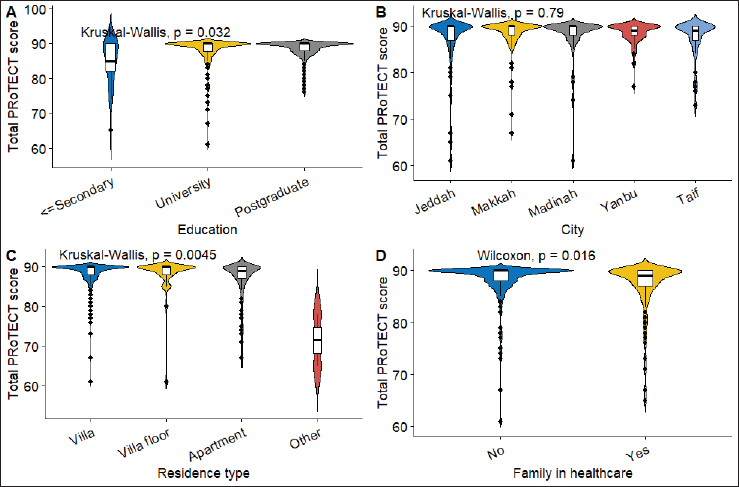
Figure 1. Parent PRoTECT scores (range of 18–90) by parents (434) in the Western Region of Saudi Arabia. The histogram shows frequencies for each score interval. The median (90) is shown by the dashed red vertical line. Shapiro–Wilk W = 0.54, p < 0.001.
Responses of “somewhat” and “strongly” agree combined made up more than 95% of the responses for 14 of the 18 items. Items that received the highest level of agreement were: policy strengthening (99.8% agree), interest in learning (99.8% agree), and intention to act if informed (99.8% agree). The lowest agreement was for item 18, trust that most products are safe (85.9% agree), and item 14, equal protective opportunities (92.9% agree) (Table 3 and Figure 2).
Univariate analysis revealed significant differences in total PRoTECT scores among the age group, educational level, household income, marital status, employment status, number of children, and place of residence (all p < 0.001). Younger parents (35 years or younger), participants in the lowest income group, non-married participants, students or trainees, and parents with five or more children had lower scores on all measures throughout. In turn, total scores were not significantly different based on parent role, city of residence, or personal employment in the health care sector (Table 4 and Figure 3).
Marital status was associated with lower PRoTECT scores (β = −11.37, 95% confidence interval [CI] −14.47 to −8.28; p < 0.001) after multiple linear regression, but these results should be interpreted as exploratory because the number of non-married participants was very small. There were also lower scores for those with the highest number of children (n ≥ 5) and lower scores for students/trainees who were not employed, while those with higher income levels had higher scores. The final model explained 37.8% of the variance in total scores (adjusted R² = 0.378). There were no collinearity concerns (all generalized variance inflation factors < 3.1) (Table 5).
Table 3. Item-level Likert response distributions and Cronbach’s alpha by domain (N = 434).
| Domain (α) | Item | Disagree¹n (%) | Neutraln (%) | Agree²n (%) | Mean (SD) |
|---|---|---|---|---|---|
| Pregnancy risks (α = 0.816) | Q1. Reducing exposure during pregnancy reduces risk | — | 5 (1.2) | 429 (98.8) | 4.89 (0.35) |
| Q2. Pregnancy exposure increases developmental risk | — | 5 (1.2) | 429 (98.8) | 4.90 (0.34) | |
| Q3. Pregnant women highly exposed to toxic chemicals | 9 (2.1) | 12 (2.8) | 413 (95.2) | 4.80 (0.61) | |
| Health effects (α = 0.813) | Q4. Daily exposure increases risk | 3 (0.7) | 4 (0.9) | 427 (98.4) | 4.87 (0.42) |
| Q5. Toxic chemicals more harmful to children | — | 4 (0.9) | 430 (99.1) | 4.90 (0.33) | |
| Q6. Prevention more beneficial than treatment | — | 3 (0.7) | 431 (99.3) | 4.93 (0.29) | |
| Public policy (α = 0.783) | Q7. Countries invest equally in prevention | 1 (0.2) | 12 (2.8) | 421 (97.0) | 4.85 (0.44) |
| Q8. Effective regulations exist | 1 (0.2) | 6 (1.4) | 427 (98.4) | 4.88 (0.40) | |
| Q9. More resources for prevention | 1 (0.2) | 1 (0.2) | 432 (99.5) | 4.93 (0.28) | |
| Q10. Policies should be strengthened | — | 1 (0.2) | 433 (99.8) | 4.96 (0.21) | |
| Health promotion (α = 0.611) | Q11. Healthcare providers should educate | 3 (0.7) | 2 (0.5) | 429 (98.8) | 4.95 (0.33) |
| Q12. Interested in learning more | — | 1 (0.2) | 433 (99.8) | 4.99 (0.12) | |
| Q13. Trust scientific sources | 2 (0.5) | 1 (0.2) | 431 (99.3) | 4.96 (0.26) | |
| Preventive behaviors (α = 0.620) | Q14. Equal opportunities to protect children | 16 (3.7) | 15 (3.5) | 403 (92.9) | 4.74 (0.75) |
| Q15. Would act if knew how to reduce exposure | 1 (0.2) | — | 433 (99.8) | 4.98 (0.21) | |
| Q16. Try to buy products without harmful chemicals | 1 (0.2) | 1 (0.2) | 432 (99.5) | 4.97 (0.26) | |
| Q17. Concerned about family exposure | 1 (0.2) | 2 (0.5) | 431 (99.3) | 4.94 (0.28) | |
| Q18. Trust that most products are safe | 27 (6.2) | 34 (7.8) | 373 (85.9) | 4.52 (0.89) |
¹Includes “strongly disagree” and “somewhat disagree” responses.
²Includes “somewhat agree” and “strongly agree” responses.
α = Cronbach’s alpha. — = zero participants.
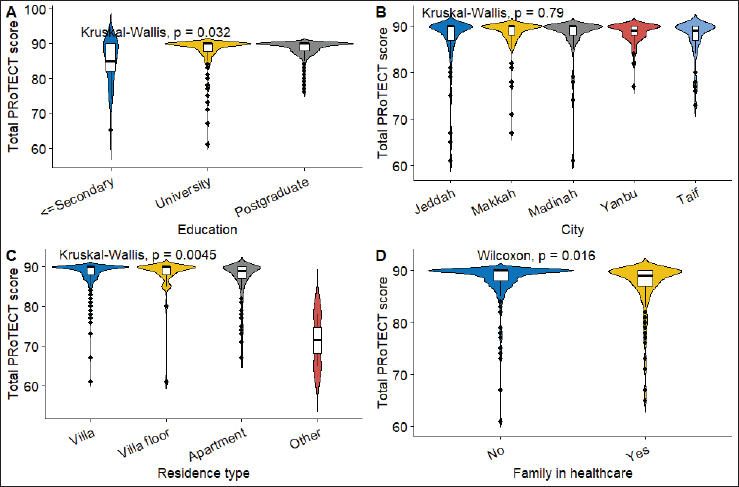
Figure 2. Distribution of Likert-scale responses for all 18 items on PRoTECT, faceted by domain. Each cell represents the percentage of the participants who endorsed the response category (from strongly disagree to strongly agree), with increasing darkness of the blue color representing a higher percentage. Groups of domains are represented as horizontal facet strips.
Table 4. Key sociodemographic factors associated with the total PRoTECT score.
| Variable | Category | Total PRoTECT mean (SD) | p -value |
|---|---|---|---|
| Age group (years) | ≤35 | 82.09 (8.03) | <0.001 |
| 36-45 | 88.08 (3.41) | ||
| 46-55 | 88.10 (4.14) | ||
| ≥56 | 88.86 (1.66) | ||
| Educational level | ≤Secondary | 84.48 (6.76) | <0.001 |
| University | 87.52 (5.19) | ||
| Postgraduate | 88.59 (2.28) | ||
| Monthly household income (SAR) | <12,000 | 82.75 (8.04) | <0.001 |
| 12,000-15,999 | 88.00 (5.44) | ||
| 16,000-19,999 | 87.95 (3.20) | ||
| 20,000-23,999 | 88.54 (2.74) | ||
| ≥24,000 | 88.12 (3.54) | ||
| Marital status | Married | 88.15 (3.56) | <0.001 |
| Other | 73.20 (10.92) | ||
| Employment status | Employed (salaried) | 88.43 (3.16) | <0.001 |
| Self-employed | 86.84 (6.05) | ||
| Homemaker | 82.11 (8.95) | ||
| Student/Trainee | 77.43 (8.92) | ||
| Retired | 84.43 (2.94) | ||
| Unemployed | 87.00 (2.83) | ||
| Number of children | 1-2 | 88.50 (3.50) | <0.001 |
| 3-4 | 88.05 (3.48) | ||
| ≥5 | 81.96 (7.09) | ||
| Residence type | Apartment | 87.14 (4.66) | <0.001 |
| Villa floor | 88.14 (4.67) | ||
| Villa | 88.36 (3.33) | ||
| Other | 71.50 (9.19) |
Only variables significantly associated with the total PRoTECT score in univariate analysis are shown; ANOVA p-values are reported.
Discussion
In the Western Region of Saudi Arabia, this study aimed to assess the awareness level of the parents and their preventive measures against environmental toxicants in children by using the PRoTECT questionnaire [12,13]. Overall, one of the main findings was the extent of parental awareness that was seen in this sample. The scores on the total PRoTECT cluster were generally at the highest end of the range, with a significant ceiling effect in all five scales. While encouraging, most of the participants picked the highest level of responses, reducing the variability in scores. This study also brings to light intriguing considerations regarding the uniformity of the environmental health literacy observed and the possible contribution of the population sampled and the response style of self-administered Likert-scale instruments.
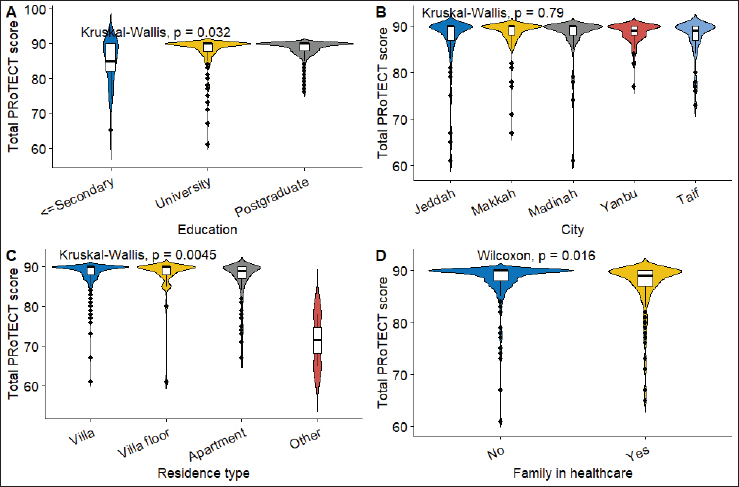
Figure 3. Stratified total PRoTECT scores by the four sociodemographic predictor variables most strongly associated with the PRoTECT scores: (A) education level, (B) city of residence, (C) family member in healthcare, and (D) residence type. The violin plots display the overall distribution of the data, while the boxplots display the median and IQR. The Kruskal–Wallis or Mann–Whitney p-value is indicated in each panel.
Table 5. Multiple linear regression of predictors associated with the total PRoTECT score.
| Predictor | β | 95% CI | p-value |
|---|---|---|---|
| Age 36-45 (ref: ≤35) | 1.84 | 0.03-3.64 | <0.05* |
| Age 46-55 | 2.14 | 0.38-3.91 | <0.05* |
| Age ≥ 56 | 2.60 | 0.74-4.45 | <0.01** |
| Education: University (ref: ≤Secondary) | −0.80 | −2.46 to 0.85 | 0.340 |
| Education: Postgraduate | −0.57 | −2.26 to 1.12 | 0.508 |
| Income 12,000-15,999 (ref: <12,000) | 3.04 | 0.91-5.18 | <0.01** |
| Income 16,000-19,999 | 2.93 | 0.84-5.02 | <0.01** |
| Income 20,000-23,999 | 3.13 | 1.02-5.25 | <0.01** |
| Income ≥24,000 | 3.17 | 1.07-5.28 | <0.01** |
| Residence: Villa floor (ref: Villa) | −0.42 | −1.45 to 0.62 | 0.430 |
| Residence: Apartment | −0.48 | −1.24 to 0.27 | 0.208 |
| Residence: Other | −6.56 | −11.70 to −1.42 | <0.05* |
| Marital: Other (ref: Married) | −11.37 | −14.47 to −8.28 | <0.001*** |
| Employment: Homemaker (ref: Salaried) | −3.88 | −6.39 to −1.38 | <0.01** |
| Employment: Retired | −0.83 | −3.65 to 1.99 | 0.564 |
| Employment: Self-employed | −0.53 | −2.03 to 0.98 | 0.494 |
| Employment: Student/Trainee | −5.71 | −8.39 to −3.02 | <0.001*** |
| Employment: Unemployed | 2.97 | −1.86 to 7.79 | 0.228 |
| Children 3-4 (ref: 1-2) | −0.77 | −1.43 to −0.11 | <0.05* |
| Children ≥5 | −3.68 | −5.39 to −1.97 | <0.001*** |
| Family in healthcare: Yes (ref: No) | −0.48 | −1.22 to 0.27 | 0.211 |
| (Constant) | 84.69 | 82.34-87.04 | <0.001*** |
Adjusted R² = 0.378; maximum GVIF^(1/(2*Df)) = 1.16. CI = confidence interval; bold p-values indicate statistical significance (p < 0.05). *p < 0.05; **p < 0.01; ***p < 0.001.
These results are significantly higher than the results of the only previous study in Saudi Arabia, which was conducted in the Jazan region and reported a median total score of 72 out of 90 [13]. The difference between that study and the present one was significant and might be attributed, at least in part, to the socio-demographic composition of the sample of the Western Region. The majority of the people who took part in the current study were highly educated, and the majority had university or postgraduate qualifications, and the vast majority reported relatively high household incomes and salaried employment. In this context, the near-maximal scores recorded in the present study seem rather high. Such conclusions should be taken with a pinch of salt. Given the potential for selection bias and social desirability bias, which might cause participants to agree with health-protective responses more than they actually do, this issue should be taken into account.
The domain with the widest range of variability was preventive behaviors, the 5 PRoTECT domains. The level of agreement for item 18 (trust in the safety of commercial products) was the lowest, indicating a higher level of uncertainty related to common environmental exposures. On the contrary, backing for more effective policies and interest in further information and in taking steps if offered to prevent the issue was virtually universal. These results are similar to those of the Jazan PRoTECT study, which found the parents to be highly motivated to learn about environmental toxicants, and in Ontario, Canada, where parents expressed concern about environmental risks despite feeling under-informed [10,13]. These findings implied that the motivation of parents was found to be greater than their access to clear and actionable information about the environment and health.
The sociodemographic analyses found significant differences in parental awareness. The older parents tended to have higher scores than the younger ones, which might be due to a gradual accumulation of health knowledge, parenting experience, or continuous exposure to health and education messages throughout their lives. This is in line with the general findings of previous studies on the relationship between parental maturity and life experience and health-related decision making and preventive engagement [2,15]. While age effects were not to be exaggerated, these suggested that the younger parent population might be particularly suited to targeted educational approaches, particularly in the antenatal and early parenting period.
Household income was a strong independent predictor of higher scores on the PRoTECT. This is consistent with evidence that there are environmental health knowledge gaps among those who were more exposed and more disadvantaged in relation to socioeconomic disadvantage [5,11]. Families with lower income resources might have fewer options to choose their dwelling, consumer purchases, and their ability to access credible health information, and might not be aware of or have the ability to engage in preventive action. The present results, thus, confirmed the notion that environmental health literacy is a cognitive as well as a social and economic problem.
Few study subjects were unmarried, so findings of marriage status and PRoTECT score were preliminary. While there was no doubt in the direction of association, which is similar to what has been found in the past linking single parenthood with lower levels of access to resources, social support, and health information, the smaller size of the non-married subgroup makes it difficult to come to any firm conclusions [4,6]. Likewise, having 5 or more children was independently linked to lower scores, indicating that caregiving burden and competing demands might limit health information seeking and preventive engagement, and similarly, being a student or trainee was linked to lower scores.
Limitations
Some restrictions need to be taken into account. First, the cross-sectional design does not allow for causal inference. Second, the recruitment process via WhatsApp, X, and Telegram utilized online convenience sampling and might have targeted parents who were more engaged with the online environment, better educated, and more socioeconomically privileged, which might have resulted in a degree of selection bias and might not necessarily represent the larger parent population of the Western Region. Third, the ceiling effect observed in each of the PRoTECT domains meant that there was less variance in scores, and this could have limited the capacity of the instrument to differentiate between high and very high levels of awareness. In addition, due to the ceiling effect, observed associations might have been weakened, and the regression model might not have been able to discern between those who actually showed different levels of awareness. The PRoTECT tool was also focused on attitudinal agreement and self-reported preventive orientation and, as such, primarily reflects agreement to statements rather than factual knowledge or directly observed behavior; attitudinal agreement with protective statements might, thus, coexist with gaps in knowledge or suboptimal behavior. The wording of some items and the strong health focus of the questions might also have led to some responses being influenced by social-desirability bias and acquiescence bias.
The results suggested that the level of parents’ reported awareness of environmental toxicants was relatively high in this sample from the Western Region, but there were still significant socioeconomic inequalities, and a high degree of verbal motivation does not necessarily lead to effective preventive action. These insights indicated that actions based solely on self-reported attitude were inadequate; there is a need to tackle structural and contextual barriers that might impede implementation of protective behaviors in everyday life.
Conclusion
In this study, parents’ awareness and their orientation toward prevention in the presence of toxicants in the environment were found to be high among a highly selected sample, which was digitally recruited mainly from highly educated and high-income parents in the Western Region of Saudi Arabia. The ceiling effect, however, was very strong for each of the PRoTECT domains, which resulted in very little variation in scores and potentially less sensitivity of the instrument to differentiate between levels of awareness. More representative studies to adequately evaluate the knowledge and preventive behaviors of parents regarding environmental health issues are needed.
Acknowledgments
The authors would like to thank all parents who participated in this study and contributed their time to complete the survey.
List of Abbreviations
ADHD Attention-deficit/hyperactivity disorder
ASD Autism Spectrum Disorder
IQR Interquartile range
PRoTECT Prevention of toxic chemicals in the environment for children tool
SAR Saudi Arabian Riyal
VIFs Variance inflation factors
WHO World Health Organization
Conflict of interest
The authors declare that there is no conflict of interest regarding the publication of this article.
Funding
None.
Consent to participate
Electronic informed consent was obtained from all participants before they participated in the study.
Consent for publication
Not applicable.
Ethical approval
Ethical approval for this study was obtained from the Biomedical Research Ethics Committee, Faculty of Medicine, Umm Al-Qura University (Approval No. HAPO-02-K-012-2026-04-3356). All procedures performed in this study were conducted in accordance with the ethical standards of the institutional research committee and the principles of the Declaration of Helsinki.
Data availability
The datasets generated and/or analyzed during the current study are available from the corresponding author on reasonable request.
Author contributions
All authors contributed to the study conception and design. Material preparation, data collection, and analysis were performed by the authors. All authors participated in manuscript drafting and revision and approved the final version of the manuscript.
Author details
Basim Alshahrani1, Renas Abdullah Alghanami2, Aya Al-Yousef3, Faisal Faiez Albalawi2, Abdulrahman Ali A Alharbi4, Nada Mohammed Albeladi5, Danah Alshahrani6, Rafa Abdulkareem Almalki7, Wesam A. Nasif8,9, Abeer Shaker El Moursy Ali10
- College of Medicine, Imam Mohammad Ibn Saud Islamic University (IMSIU), Riyadh, Saudi Arabia
- College of Medicine, Tabuk University, Tabuk, Saudi Arabia
- College of Medicine, Homs University, Homs, Syrian Arab Republic
- College of Medicine, Umm Al-Qura University, Alqunfudah, Saudi Arabia
- Medicine Department, College of Medicine, University of Hail, Hail, Saudi Arabia
- College of Medicine, Almaarefa University, Riyadh, Saudi Arabia
- College of Medicine, King Abdulaziz University, Jeddah, Saudi Arabia
- Department of Biochemistry, College of Medicine, Umm Al-Qura University, Makkah, Saudi Arabia
- Molecular Biology Department, Faculty of Biotechnology, Sadat City University, Sadat City, Egypt
- Department of Pathology, Makkah College, Makkah, Saudi Arabia
Supplementary content (If any) is available online.
References
- Singh RD, Koshta K, Tiwari R, Khan H, Sharma V, Srivastava V. Developmental exposure to endocrine disrupting chemicals and its impact on cardio-metabolic-renal health. Front Toxicol. 2021;3:663372. https://doi.org/10.3389/ftox.2021.663372
- Sokan-Adeaga AA, Sokan-Adeaga MA, Sokan-Adeaga ED, Oparaji AN, Edris H, Tella EO, et al. Environmental toxicants and health adversities: a review on interventions of phytochemicals. J Public Health Res. 2023;12(2):22799036231181226. https://doi.org/10.1177/22799036231181226
- Bearer CF. Environmental health hazards: how children are different from adults. Future Children. 1995;5(2):11–26. https://doi.org/10.2307/1602354
- Sly PD, Flack F. Susceptibility of children to environmental pollutants. Ann New York Acad Sci. 2008;1140:163–83. https://doi.org/10.1196/annals.1454.017
- Grandjean P, Landrigan PJ. Neurobehavioural effects of developmental toxicity. Lancet Neurol. 2014;13(3):330–8. https://doi.org/10.1016/S1474-4422(13)70278-3
- Goldizen FC, Sly PD, Knibbs LD. Respiratory effects of air pollution on children. Pediatric Pulmonology. 2016;51(1):94–108. https://doi.org/10.1002/ppul.23262
- Green R, Lanphear B, Phipps E, Goodman C, Joy J, Rihani S, et al. Development and validation of the Prevention of Toxic Chemicals in the Environment for Children Tool: a questionnaire for examining the community’s knowledge of and preferences toward toxic chemicals and children’s brain development. Front Public Health. 2022;10:863071. https://doi.org/10.3389/fpubh.2022.863071
- Yang SN, Hsieh CC, Kuo HF, Lee MS, Huang MY, Kuo CH, et al. The effects of environmental toxins on allergic inflammation. Allergy Asthma Immunol Res. 2014;6(6):478–84. https://doi.org/10.4168/aair.2014.6.6.478
- Ferguson A, Penney R, Solo-Gabriele H. A review of the field on children’s exposure to environmental contaminants: a risk assessment approach. Int J Environ Res Public Health. 2017;14(3):265. https://doi.org/10.3390/ijerph14030265
- Crighton EJ, Brown C, Baxter J, Lemyre L, Masuda JR, Ursitti F. Perceptions and experiences of environmental health risks among new mothers: a qualitative study in Ontario, Canada. Health Risk Soc. 2013;15(4):295–312. https://doi.org/10.1080/13698575.2013.796345
- Daniel L, Michot M, Esvan M, Guérin P, Chauvet G, Pelé F. Perceptions, knowledge, and practices concerning indoor environmental pollution of parents or future parents. Int J Environ Res Public Health. 2020;17(20):7669. https://doi.org/10.3390/ijerph17207669
- Alqassim AY, Alharbi AA, Muaddi MA, Jurebi RM, Daak LI, Moafa AI, et al. Assessing environmental health hazard awareness for sustainability: a survey of adults in Saudi Arabia. Sustainability. 2024;16(2):593. https://doi.org/10.3390/su16020593
- Alqassim AY. Evaluating parental knowledge and behaviors regarding developmental toxicants in Jazan, Saudi Arabia using the Prevention of Toxic Chemicals in the Environment for Children Tool (PRoTECT). Healthcare. 2024;12(17):1764. https://doi.org/10.3390/healthcare12171764
- Lam J, Lanphear BP, Bellinger D, Axelrad DA, Mcpartland J, Sutton P, et al. Developmental PBDE exposure and IQ/ADHD in childhood: a systematic review and meta-analysis. Environ Health Perspect. 2017;125(8):86001. https://doi.org/10.1289/EHP1632
- Green R, Till C, Flora D, Lanphear B, Walker K, Salman Z, et al. Global randomized controlled trial of knowledge translation of children’s environmental health. PLoS One. 2025;20(4):319447. https://doi.org/10.3389/fpubh.2025.1502006
Keywords: Environmental toxicants, parental awareness, preventive behaviors, PRoTECT questionnaire, Saudi Arabia.


Publication History
Received: June 12, 2026
Accepted: July 03, 2026
Published: August 15, 2026
Authors
Basim Alshahrani
College of Medicine, Imam Mohammad Ibn Saud Islamic University (IMSIU), Riyadh, Saudi Arabia.
 ORCID
Abdulrahman Ali A Alharbi
College of Medicine, Umm Al-Qura University, Alqunfudah, Saudi Arabia.
Nada Mohammed Albeladi
Medicine Department, College of Medicine, University of Hail, Hail, Saudi Arabia.
Rafa Abdulkareem Almalki
College of Medicine, King Abdulaziz University, Jeddah, Saudi Arabia.
Wesam A. Nasif
Department of Biochemistry, College of Medicine, Umm Al-Qura University, Makkah, Saudi Arabia.