Annals of Middle Eastern Medicine
Khalid A. Alzahrani et al. Annals of Middle Eastern Medicine. 2026;2(3):237-244
ORIGINAL ARTICLE
A silent tragedy: unveiling Al-Baha community awareness toward shaken baby syndrome
Khalid A. Alzahrani1, Abdulhakeem A. Alghamdi1, Rami F. Alghamdi1, Mesfer S. Alzahrani1, Abdullah A. Alghamdi1, Mohammad I. Barnawi1
Correspondence to: Mohammad I. Barnawi
*Assistant Professor, Department of Surgery, Faculty of Medicine, Al-Baha University, Alaqiq, Saudi Arabia.
Email: mbarnawi@bu.edu.sa
Full list of author information is available at the end of the article.
Received: 21 June 2026 | Revised (1): 17 July 2026 | Revised (2): 22 July 2026 |Accepted: 02 August 2026
ABSTRACT
Background:
Shaken baby syndrome (SBS), or abusive head trauma, is a preventable cause of serious head injury in infants, carrying high morbidity and mortality. Despite its severity, community awareness remains limited in Saudi Arabia, with no prior data from the Al-Baha region.
Methods:
A cross-sectional study was conducted in Al-Baha, Saudi Arabia (December 2023–April 2024). A validated Arabic-language questionnaire (content validity index 0.91; Cronbach’s α 0.83) was distributed via Google Form to residents aged 18–60 years; healthcare professionals and nonresidents were excluded. Awareness was defined as self-reported prior knowledge of SBS based on a single screening question. Chi-squared or Fisher’s exact tests and binary logistic regression were used to identify factors associated with awareness.
Results:
Of 405 included participants (50.6% male), 84.7% (95% confidence intervals (CIs) 80.9%-87.9%) had never heard of SBS. On multivariable analysis, age 40-49 years (adjusted odds ratio (OR) 3.04%, 95% CI 1.49-6.21; p = 0.002), postgraduate education (adjusted OR 4.86, 95% CI 1.48-15.95; p = 0.009), high school education relative to university (adjusted OR 2.52, 95% CI 1.32-4.81; p = 0.005), and having children (adjusted OR 1.92, 95% CI 1.04-3.53; p = 0.037) were independently associated with higher awareness. Social media was the primary information source among aware participants (58.1%, 95% CI 45.7%-69.5%).
Conclusion:
SBS awareness in Al-Baha is critically low. Structured, evidence-based educational interventions targeting the antenatal period and leveraging social media are required.
Keywords:
Shaken baby syndrome, abusive head trauma, child maltreatment, parental awareness, cross-sectional study, Saudi Arabia.
Introduction
Shaken baby syndrome (SBS), also referred to as abusive head trauma (AHT), encompasses the spectrum of injuries resulting from the violent shaking of an infant or young child. Even brief episodes of such force can produce severe, potentially fatal, intracranial injury. [1,2] Infants are disproportionately vulnerable during their first year of life owing to the relative weight of the head, poor cervical muscle tone, and the fragility of bridging cerebral veins. [3]
The reported incidence of SBS/AHT has been increasing. A Saudi Arabian epidemiological study identified a rise in confirmed cases following 2014, [4] while a United States surveillance study estimated 5.4 ± 0.3 confirmed and probable cases per 100,000 children aged three years and under. [5] Recognized risk factors include inadequate knowledge of infant care, single parenthood, parental depression, substance misuse, low educational attainment, and socioeconomic hardship. [4]
The clinical hallmarks of SBS include subdural hemorrhage and retinal hemorrhage, and the condition carries a high risk of blindness, developmental delay, severe brain injury, and death. Presenting symptoms, vomiting, irritability, respiratory distress, lethargy, convulsions, and coma are frequently nonspecific, and approximately 30% of cases are not identified at the initial clinical evaluation, underscoring the importance of maintaining a high index of suspicion. [6,7,8] Management is multidisciplinary, involving pediatrics, neurosurgery, and psychiatry, among other specialties. [9] Long-term morbidity ranges from subtle learning difficulties to profound cognitive and physical disability, with a reported case-fatality rate of up to 25%. [10,11]
Prevention of SBS centers on caregiver education. Evidence-based strategies for parents include breastfeeding, scheduled rest intervals, and the use of infant carriers or swings during periods of inconsolable crying. [12] Primary care pediatricians occupy a pivotal position in prevention; structured educational interventions, including brief counselling sessions and written materials, have been shown to improve parental knowledge and acceptance of preventive practices. [13,14]
Several Saudi Arabian studies have documented low SBS awareness in different regions: 15% of respondents in Al-Qassim had good knowledge, [15] 21.4% in Hail, [16], and 32.3% in Jeddah. [17] No data from the Al-Baha region had been published at the time of this study. The present study therefore aimed to assess SBS knowledge and attitudes among Al-Baha residents and to identify the sociodemographic factors independently associated with awareness.
Subjects and Methods
Study design and setting
An observational cross-sectional study was conducted in the Al-Baha region of Saudi Arabia between December 2023 and April 2024.
Participants
Inclusion criteria were permanent residents of Al-Baha region, aged 18–60 years, and willingness to participate. Exclusion criteria were non-residents of Al-Baha, healthcare professionals, and individuals who declined to participate. Healthcare professionals were excluded to prevent inflation of knowledge scores and to focus on the general public.
Sample size
For an estimated regional population of approximately 400,000, a minimum sample size of 384 participants was calculated using the Raosoft online calculator (www.raosoft.com/samplesize.html), based on a 5% margin of error, 95% CI, and an assumed response distribution of 50%.
Outcome definition
Awareness of SBS was defined as an affirmative response to a single screening question: “Have you previously read or heard about Shaken Baby Syndrome?” Participants who answered “yes” were classified as “aware”; those who answered “no” were classified as “unaware.” This binary classification was the primary outcome for all inferential analyses.
Data collection instrument
The questionnaire was adapted from previously published Arabic-language SBS awareness instruments used in comparable Saudi cross-sectional studies. [17,18] Content validity was established by a panel of five subject-matter experts (pediatric surgeons, anesthesiologists, and a public health specialist), yielding a content validity index (CVI) of 0.91, indicating excellent content coverage. Internal consistency was assessed in a pilot sample of 30 participants before the main data collection; Cronbach’s α was 0.83, confirming satisfactory reliability of the knowledge subscale. The final instrument comprised three sections: Section A collected sociodemographic data (age, sex, marital status, educational attainment, monthly income, and number of children); Section B assessed SBS knowledge through questions on etiology, symptoms, complications, risk factors, and clinical response; and Section C explored sources of health information. Informed consent was obtained at the outset of the questionnaire, and confidentiality was assured.
Data collection procedure
The questionnaire was administered as a Google Form. The form required mandatory e-mail verification prior to submission, which prevented duplicate responses from the same respondent. Residency in Al-Baha was confirmed through a mandatory screening question at the beginning of the form; respondents who did not indicate Al-Baha residency were excluded at the analysis stage. The link was disseminated via social media platforms. This methodology, while convenient and low cost, carries an inherent self-selection bias and may under-represent populations with limited digital access.
Statistical analysis
Descriptive statistics, including frequencies, proportions (%), and 95% CI, were used to summarize categorical data. Wilson score CIs were calculated for key proportions. Associations between sociodemographic variables and SBS awareness were evaluated using the chi-squared test or Fisher’s exact test, as appropriate. Variables significant at P < 0.20 on univariate analysis (sex, age, educational level, and having children) were entered into a binary logistic regression model with SBS awareness (aware = 1; unaware = 0) as the outcome variable. Adjusted odds ratios (ORs) with 95% CIs are reported. All analyses were performed using the Statistical Package for the Social Sciences (SPSS), version 28 (IBM Corp., Armonk, NY, USA). Statistical significance was set at P < 0.05. Exact P values are reported throughout.
Ethics
The study was conducted in accordance with the principles of the Declaration of Helsinki. Ethical approval was obtained from the Institutional Review Board of the Faculty of Medicine, Al-Baha University (REC/SUR/BU-FM/2023/93). All participants provided informed consent prior to commencing the questionnaire.
Results
Of 425 initial respondents, 20 were excluded (18 healthcare professionals; two who declined consent), yielding a final analytical sample of 405 participants (Figure 1). The sociodemographic distribution and univariate associations with SBS awareness are presented in Table 1.
Univariate analysis
Males constituted 50.6% of the sample. Female sex was significantly associated with higher SBS awareness (19.0% of females vs. 11.7% of males; P = 0.028). The majority of participants were aged 18–29 years (43.2%), yet the highest proportion of aware participants was observed in the 40–49-year age group (25.4%); age was a statistically significant factor (P = 0.006). Married participants comprised 48.4% of the sample; marital status was not significantly associated with awareness (P = 0.187). Most participants held a university degree (74.1%), and those with postgraduate qualifications had a significantly higher rate of awareness (38.5%; P = 0.040). Participants who had children were more likely to have heard of SBS (19.1% vs. 11.1% of childless participants; P = 0.027), whereas number of children and monthly income were not significantly associated with awareness (P = 0.149 and P = 0.061, respectively).
Multivariable analysis
On binary logistic regression controlling for sex, age group, educational level, and having children, three factors were independently associated with SBS awareness (Table 2). Age 40–49 years was associated with substantially higher odds of awareness compared with the 18–29-year reference group (adjusted OR 3.04, 95% CI 1.49–6.21; P = 0.002). Among educational categories, postgraduate qualification was the strongest predictor of awareness relative to university-degree holders (adjusted OR 4.86, 95% CI 1.48–15.95; P = 0.009); having a high school education was also associated with higher odds of awareness compared to university degree (adjusted OR 2.52, 95% CI 1.32–4.81; P = 0.005). Having children was independently associated with greater awareness (adjusted OR 1.92, 95% CI 1.04–3.53; P = 0.037). After adjustment, sex was no longer a significant predictor of awareness (adjusted OR 1.06, 95% CI 0.59–1.89; P = 0.851).
Knowledge and information sources
The majority of participants (84.7%, 95% CI 80.9–87.9%) had never read or heard about SBS. Among the 62 participants (15.3%, 95% CI 12.1–19.1%) who were aware, social media was the predominant source of information (58.1%, 95% CI 45.7–69.5%), whereas healthcare professionals accounted for only 19.4% (95% CI 11.4–30.9%). Knowledge of specific clinical features was limited: only 10.4% of all participants identified inability to concentrate and 7.9% identified epileptic seizures as symptoms of SBS. Regarding complications, 29.6% (95% CI 25.4–34.2%) of participants incorrectly believed that SBS has no complications (Table 3).
Regarding the most dangerous age for SBS, 59.3% (95% CI 54.5–64.0%) of participants were unable to answer, while 24.9% correctly identified the first year of life. Vigorous forward-and-backward shaking was correctly identified as a primary cause by 43.7% of participants. Domestic violence (47.9%), low parental education (44.4%), unstable family environment (44.4%), and postpartum depression (36.4%) were the most frequently identified risk factors (Table 3).
When asked about the appropriate response if SBS was suspected, 48.6% (95% CI 43.8–53.5%) of participants reported not knowing, while 29.6% indicated seeking medical care and 12.3% (95% CI 9.5–15.9%) would monitor the child at home (Table 4). Increasing parental awareness was the most commonly endorsed prevention strategy (29.6%), followed by not leaving the child with an unauthorized caregiver (22.0%), parenting skills courses (20.5%), seeking psychological support (18.3%), and enacting stricter legal penalties (8.9%).
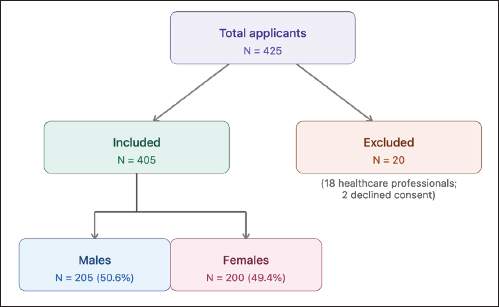
Figure 1. Flow diagram illustrating participant enrolment and exclusion.
Table 1. Sociodemographic factors and univariate association with shaken baby syndrome awareness (N = 405).
| Variable | n | % of total | Unaware (n) | Unaware (%) | Aware (n) | Aware (%) | P value |
|---|---|---|---|---|---|---|---|
| Sex | |||||||
| Male | 205 | 50.6 | 181 | 88.3 | 24 | 11.7 | |
| Female | 200 | 49.4 | 162 | 81 | 38 | 19 | |
| 0.028* | |||||||
| Age group (years) | |||||||
| 18–29 | 175 | 43.2 | 148 | 84.6 | 27 | 15.4 | |
| 30–39 | 116 | 28.6 | 108 | 93.1 | 8 | 6.9 | |
| 40–49 | 67 | 16.5 | 50 | 74.6 | 17 | 25.4 | |
| 50–59 | 38 | 9.4 | 30 | 78.9 | 8 | 21.1 | |
| ≥ 60 | 9 | 2.2 | 7 | 77.8 | 2 | 22.2 | |
| 0.006* | |||||||
| Marital status | |||||||
| Single | 159 | 39.3 | 140 | 88.1 | 19 | 11.9 | |
| Married | 196 | 48.4 | 159 | 81.1 | 37 | 18.9 | |
| Divorced | 40 | 9.9 | 34 | 85 | 6 | 15 | |
| Widowed | 10 | 2.5 | 10 | 100 | 0 | 0 | |
| 0.187 | |||||||
| Educational level | |||||||
| High school | 89 | 22 | 73 | 82 | 16 | 18 | |
| University | 300 | 74.1 | 260 | 86.7 | 40 | 13.3 | |
| Postgraduate | 13 | 3.2 | 8 | 61.5 | 5 | 38.5 | |
| None | 3 | 0.7 | 2 | 66.7 | 1 | 33.3 | |
| 0.040* | |||||||
| Monthly income (SAR) | |||||||
| < 5,000 | 106 | 26.2 | 87 | 82.1 | 19 | 17.9 | |
| 5,000–10,000 | 191 | 47.2 | 170 | 89 | 21 | 11 | |
| > 10,000 | 108 | 26.7 | 86 | 79.6 | 22 | 20.4 | |
| 0.061 | |||||||
| Has children | |||||||
| No | 190 | 46.9 | 169 | 88.9 | 21 | 11.1 | |
| Yes | 215 | 53.1 | 174 | 80.9 | 41 | 19.1 | |
| 0.027* |
* P < 0.05. SBS , shaken baby syndrome; SAR , Saudi Riyal.
Discussion
This cross-sectional study found that 84.7% (95% CI 80.9–87.9%) of the Al-Baha general population had never heard of SBS, reflecting a profound awareness gap. This finding is broadly consistent with data from other Saudi regions—Makkah Province (64% unaware) [18] and Jeddah (approximately 70% unaware) [17], and with international data from countries with limited SBS public health infrastructure. [12,13] Contributory factors in the Saudi context may include the absence of dedicated national SBS awareness campaigns, a paucity of Arabic-language educational materials, inconsistent inclusion of SBS in undergraduate health curricula, and limited broadcast media coverage of child maltreatment.
Table 2. Binary logistic regression: factors independently associated with shaken baby syndrome awareness (N = 405).
| Variable | Adjusted OR | 95% CI | P value |
|---|---|---|---|
| Sex (ref: male) | |||
| Female | 1.06 | 0.59–1.89 | 0.851 |
| Age group (ref: 18–29 years) | |||
| 30–39 | 0.45 | 0.19–1.08 | 0.074 |
| 40–49 | 3.04 | 1.49–6.21 | 0.002* |
| 50–59 | 1.29 | 0.49–3.39 | 0.606 |
| ≥ 60 | 0.92 | 0.10–8.50 | 0.943 |
| Educational level (ref: university degree) | |||
| High school | 2.52 | 1.32–4.81 | 0.005* |
| Postgraduate | 4.86 | 1.48–15.95 | 0.009* |
| None | 2.43 | 0.23–26.20 | 0.464 |
| Has children (ref: no) | |||
| Yes | 1.92 | 1.04–3.53 | 0.037* |
* P < 0.05. OR , odds ratio; CI , confidence interval. Reference categories: male sex; age 18–29 years; university education; no children.
Table 3. Knowledge and awareness of shaken baby syndrome among all participants (N = 405).
| Item | n | % (95% CI) |
|---|---|---|
| Awareness of SBS | ||
| Never heard of SBS | 343 | 84.7 (80.9–87.9) |
| Heard of SBS | 62 | 15.3 (12.1–19.1) |
| Source of information (among aware participants, n = 62) | ||
| Doctor | 12 | 19.4 |
| Friends or relatives | 5 | 8.1 |
| Television | 5 | 8.1 |
| Social media | 36 | 58.1 (45.7–69.5) |
| Magazine | 1 | 1.6 |
| Radio | 3 | 4.8 |
| Relative or acquaintance affected by SBS | ||
| No | 389 | 96.0 |
| Yes | 16 | 4.0 |
| Most dangerous age for SBS | ||
| Before first year of life (correct) | 101 | 24.9 (20.9–29.4) |
| After first year of life | 64 | 15.8 |
| Do not know | 240 | 59.3 (54.5–64.0) |
| Recognized cause of SBS | ||
| Vigorous forward-and-backward shaking | 177 | 43.7 |
| Fall from a height | 82 | 20.2 |
| Other | 146 | 36.0 |
| Recognized risk factors (multiple responses permitted) | ||
| Young or single parenthood | 142 | 37.8 |
| Low parental educational level | 167 | 44.4 |
| Domestic violence | 180 | 47.9 |
| Substance misuse | 111 | 29.5 |
| Postpartum depression | 137 | 36.4 |
| Unstable family environment | 167 | 44.4 |
| Recognized symptoms of SBS (multiple responses permitted) | ||
| Lethargy | 16 | 4.0 |
| Malnutrition | 23 | 5.7 |
| Inability to concentrate | 42 | 10.4 |
| Difficulty breathing | 22 | 5.4 |
| Pallor or cyanosis | 16 | 4.0 |
| Epileptic seizures | 32 | 7.9 |
| Paralysis | 16 | 4.0 |
| Opisthotonic posturing | 28 | 6.9 |
| Vomiting | 22 | 5.4 |
| Do not know | 188 | 46.4 |
| Recognized complications of SBS (multiple responses permitted) | ||
| Partial or complete blindness | 24 | 5.9 |
| Epileptic seizures | 60 | 14.8 |
| Intracranial hemorrhage | 44 | 10.9 |
| Respiratory difficulty | 25 | 6.2 |
| Long-term cognitive impairment | 69 | 17.0 |
| Paralysis | 25 | 6.2 |
| Death | 38 | 9.4 |
| No complications (incorrect) | 120 | 29.6 (25.4–34.2) |
95% CI, 95% confidence interval (Wilson score; presented for key proportions). Source-of-information percentages are calculated among the 62 aware participants; all other percentages are of the total sample (N = 405). SBS , shaken baby syndrome.
On multivariable logistic regression, age 40–49 years, postgraduate and high school educational level, and having children emerged as independent predictors of awareness, while sex lost statistical significance after adjustment. The attenuation of the sex effect after controlling for other covariates suggests that the univariate female-awareness association was confounded by the distribution of parenthood and educational level within the sample. The finding that awareness was highest in the 40–49-year group suggests that lived parenting experience and cumulative health information exposure over time may be more important drivers of SBS knowledge than either younger age or formal educational attainment alone. The notably low awareness among participants aged 30–39 years (6.9%), who represent a key parenting cohort, is of particular public health concern and warrants further investigation.
Table 4. Participants’ responses regarding recognition and prevention of shaken baby syndrome (N = 405).
| Item | n | % (95% CI) |
|---|---|---|
| Appropriate response if SBS suspected (single response) | ||
| Go to emergency department | 2 | 0.5 |
| Book an appointment with a doctor | 1 | 0.2 |
| Seek medical care (any) | 120 | 29.6 (25.4–34.2) |
| Consult a traditional healer | 35 | 8.6 |
| Monitor child at home | 50 | 12.3 (9.5–15.9) |
| Do not know | 197 | 48.6 (43.8–53.5) |
| Prevention strategies endorsed (multiple responses permitted) | ||
| Controlled breathing until calm | 1 | 0.2 |
| Allow baby to cry without intervention | 1 | 0.2 |
| Seek psychological support from family or relatives | 74 | 18.3 |
| Consult pediatrician for persistent crying | 1 | 0.2 |
| Avoid leaving child with an unauthorized caregiver | 89 | 22.0 |
| Increase parental awareness of SBS | 120 | 29.6 |
| Parenting skills courses | 83 | 20.5 |
| Strict legal penalties for child harm | 36 | 8.9 |
Percentages are of the total sample (N = 405). SBS , shaken baby syndrome; CI , confidence interval.
Among the most frequently identified risk factors was domestic violence, cited by 47.9% of participants, notably higher than the 28.3% reported in a Makkah study [18], suggesting regional variability in public sensitisation to gender-based violence. The literature documents that intimate partner violence is associated with traumatic brain injury in infants through mechanisms including violent shaking, blunt trauma, and forcible falls. [20] Postpartum depression was identified as a risk factor by 36.4% of participants, consistent with evidence associating postnatal depression with aggressive caregiving behaviors. [21,22]
Increasing parental awareness was the most widely recommended prevention strategy (29.6%), consistent with published evidence. Hospital-based parent education programmes have been associated with meaningful reductions in SBS/AHT incidence: Dias et al. reported a 47% reduction in head injuries, [24] Altman et al. a 75% reduction using a maternity nurse-delivered model, [25] and Barr et al. a sustained 35% reduction over eight years. [10] Broader structural interventions have also been evaluated: paid parental leave has been associated with reduced hospital admissions for AHT, [26] and the Nurse–Family Partnership programme has been associated with long-term reductions in child maltreatment in high-risk families. [27]
Social media was the predominant source of SBS information among aware participants (58.1%, 95% CI 45.7–69.5%), compared with only 19.4% who cited healthcare professionals. This pattern is consistent with findings from Jeddah [17] and reflects the broader Saudi experience of digital health information seeking, where internet penetration exceeds 95%. [28] The high reliance on social media identifies both a current information channel and a potential platform for future health promotion. However, the unregulated nature of social media content raises concerns about information accuracy, and future interventions should ensure that reliable, evidence-based material is prominently disseminated.
Study limitations
Several limitations must be acknowledged. The cross-sectional design precludes the establishment of causal relationships, and reported associations should not be interpreted as causal. Recruitment via social media introduces self-selection bias and is likely to under-represent older adults, individuals with lower digital literacy, and those residing in rural areas. Reliance on self-reported data may introduce social desirability bias and recall bias. The study was conducted in a single region, which limits generalizability. Awareness was operationalized as a binary self-report, with no validation against a clinical knowledge gold standard; participants who reported prior awareness may not have retained accurate information. The logistic regression was conducted on aggregate data reconstructed proportionally from univariate marginal counts, rather than from complete-case individual records; this is a recognized limitation of performing multivariable analysis on published cross-tabulations. Finally, while questionnaire reliability (Cronbach’s α 0.83) and content validity (CVI 0.91) were established, formal psychometric validation with test–retest reliability in a larger sample would further strengthen the instrument.
Recommendations
Based on the present findings, the following are proposed: (1) implementation of targeted SBS awareness campaigns, co-designed with healthcare professionals, and delivered via social media; (2) routine inclusion of SBS education in antenatal and postnatal care programmes; (3) SBS awareness modules integrated into university and community centre curricula; (4) hospital-based parental education at the time of discharge following delivery; and (5) development of Arabic-language helplines and counselling services for carers experiencing infant-care stress.
Conclusion
SBS awareness among the general population of Al-Baha is critically low, with 84.7% of participants never having heard of the condition. On multivariable analysis, age 40–49 years, postgraduate and high school educational level, and having children were independently associated with greater awareness; sex was not an independent predictor after adjustment. Social media is the dominant, though not necessarily reliable, information channel for those who are aware. These findings highlight the need for structured, evidence-based educational interventions targeting the antenatal period and the 30–39-year age group, who represent a key parenting cohort with the lowest awareness observed.
List of abbreviations
AHT Abusive head trauma
CI Confidence interval
CVI Content validity index
OR Odds ratio
SBS Shaken baby syndrome
SPSS Statistical Package for the Social Sciences
Conflict of interests
The authors declare that there is no conflict of interest regarding the publication of this article.
Funding
None.
Consent for participation
Written informed consent was obtained from all the participants before completion of the questionnaire.
Consent for publication
Non applicable.
Ethical approval
Ethical approval was granted by Institutional Review Board of the Faculty of Medicine, Al-Baha University via reference: REC/SUR/BU-FM/2023/93.
Author details
Khalid A. Alzahrani, Abdulhakeem A. Alghamdi, Rami F. Alghamdi, Mesfer S. Alzahrani, Abdullah A. Alghamdi, Mohammad I. Barnawi
Department of Surgery, Faculty of Medicine, Al-Baha University, Alaqiq, Saudi Arabia
Supplementary content (If any) is available online.
References
- Stewart TC, Polgar D, Gilliland J, Tanner DA, Girotti MJ, Parry N, et al. Shaken baby syndrome and a triple-dose strategy for its prevention. J Trauma. 2011;71(6):1801–7. https://doi.org/10.1097/TA.0b013e318237dcaa
- Mian M, Shah J, Dalpiaz A, Schwamb R, Miao Y, Warren K, et al. Shaken baby syndrome: a review. Fetal Pediatr Pathol. 2015;34(3):169–75. https://doi.org/10.3109/15513815.2014.999394
- US Department of Health and Human Services. Child maltreatment 2022. Washington, DC: Administration for Children and Families; 2023.
- Alanazi FS, Saleheen H, Al-Eissa M, Alshamrani AA, Alhuwaymani AA, Jarwan WK, et al. Epidemiology of abusive head trauma among children in Saudi Arabia. Cureus. 2021;13(10):e19014. https://doi.org/10.7759/cureus.19014
- Conrad A, Butcher B, Oral R, Ronnenberg M, Peek-Asa C. Trends in shaken baby syndrome diagnosis codes among young children hospitalised for abuse. Inj Epidemiol. 2021;8:46. https://doi.org/10.1186/s40621-021-00338-6
- Hung KL. Paediatric abusive head trauma. Biomed J. 2020;43(3):240–50. https://doi.org/10.1016/j.bj.2020.03.008
- Sheets LK, Leach ME, Koszewski IJ, Lessmeier AM, Nugent M, Simpson P. Sentinel injuries in infants evaluated for child physical abuse. Pediatrics. 2013;131(4):701–7. https://doi.org/10.1542/peds.2012-2780
- Altman RL, Brand DA, Forman S, Kutscher ML, Lowenthal DB, Franke KA, et al. Abusive head injury as a cause of apparent life-threatening events in infancy. Arch Pediatr Adolesc Med. 2003;157(10):1011–5. https://doi.org/10.1001/archpedi.157.10.1011
- Průchová D. Shaken baby syndrome: diagnosis, treatment, prevention – a multidisciplinary approach [thesis]. České Budějovice: University of South Bohemia; 2013.
- Barr RG, Barr M, Rajabali F, Humphreys C, Pike I, Brant R, et al. Eight-year outcome of implementation of abusive head trauma prevention. Child Abuse Negl. 2018;84:106–14. https://doi.org/10.1016/j.chiabu.2018.07.004
- Lind K, Toure H, Brugel D, Meyer P, Laurent-Vannier A, Chevignard M. Extended follow-up of neurological, cognitive, behavioural and academic outcomes after severe abusive head trauma. Child Abuse Negl. 2016;51:358–67. https://doi.org/10.1016/j.chiabu.2015.08.021
- Gao Q, Tong L, Tang L, Zhong W, Zhu H. Parental knowledge on infant crying and abusive head trauma and relevant shaking behaviours in China. Child Abuse Negl. 2021;115:105025. https://doi.org/10.1016/j.chiabu.2021.105025
- Abujaber S, Al-Wreikat M, Hamdan M, Odeh R. Parental awareness regarding shaken baby syndrome and associated factors in Jordan. J Child Health Care. 2024;28(1):131–41. https://doi.org/10.1177/13674935231214046
- Latino AL, Miglioranzi P, Coppo E, Giannotta F. Knowing, recognising, and preventing shaken baby syndrome: the role of the primary care paediatrician. Glob Pediatr. 2024;9:100206. https://doi.org/10.1016/j.gpeds.2024.100206
- Alowaydhi A, Alowaydhi M, Alowaydhi N, Alowaydhi R, Alowaydhi S. Awareness, knowledge, and attitude about shaken baby syndrome among parents in Qassim region: a cross-sectional study. Int J Med Res Health Sci. 2024;13(2):45–53.
- Ibrahim S, Alzahrani H, Alsalmi G, Alkhalifah R, Albarrak S, Aloufi L, et al. Parental knowledge and awareness about shaken baby syndrome in Hail city. Saudi J Health Sci. 2023;12(3):180–6.
- Alzahrani F, Al-Jabri BA, Ramadan SAL, Alshehri AM, Alsheikh AS, Mushaeb HH, et al. Parental knowledge and awareness about shaken baby syndrome in Jeddah, Saudi Arabia: a cross-sectional study. Pediatr Rep. 2023;15(2):311–22. https://doi.org/10.3390/pediatric15020028
- Felemban T, Shareef H, Almajnooni N, Alhadramy J, Alabbad Z, Alhuda R, et al. Awareness of parents about shaken baby syndrome in Makkah, Saudi Arabia. Med Sci. 2023;27:e249.
- Alghanim FF, Almubayedh TA, Alseba Z. Assessing awareness, knowledge, and attitude of Saudi mothers regarding shaken baby syndrome in the Eastern Province: a cross-sectional prospective study. Cureus. 2024;16(1):e51884. https://doi.org/10.7759/cureus.51884
- Ralston B, Rable J, Larson T, Handmaker H, Lifshitz J. Forensic nursing examination to screen for traumatic brain injury following intimate partner violence. J Aggress Maltreat Trauma. 2019;28(6):732–43. https://doi.org/10.1080/10926771.2019.1580656
- Fujiwara T, Yamaoka Y, Morisaki N. Self-reported prevalence and risk factors for shaking and smothering among mothers of 4-month-old infants in Japan. J Epidemiol. 2016;26(1):4–13. https://doi.org/10.2188/jea.JE20140216
- Adamsbaum C, Grabar S, Mejean N, Rey-Salmon C. Abusive head trauma: judicial admissions highlight violent and repetitive shaking. Pediatrics. 2010;126(3):546–55. https://doi.org/10.1542/peds.2009-3647
- Dias MS, Cappos KM, Rottmund CM, Reed ME, Smith KM, deGuehery KA, et al. Preventing abusive head trauma: can educating parents reduce the incidence? Pediatr Radiol. 2021;51(6):1093–6. https://doi.org/10.1007/s00247-020-04895-2
- Dias MS, Smith K, DeGuehery K, Mazur P, Li V, Shaffer ML. Preventing abusive head trauma among infants and young children: a hospital-based, parent education programme. Pediatrics. 2005;115(4):e470–7. https://doi.org/10.1542/peds.2004-1880
- Altman RL, Canter J, Patrick PA, Daley N, Butt NK, Brand DA. Parent education by maternity nurses and prevention of abusive head trauma. Pediatrics. 2011;128(5):e1164–72. https://doi.org/10.1542/peds.2010-3619
- Klevens J, Luo F, Xu L, Peterson C, Latzman NE. Paid family leave’s effect on hospital admissions for paediatric abusive head trauma. Inj Prev. 2016;22(6):442–5. https://doi.org/10.1136/injuryprev-2015-041702
- Olds DL. Preventing child maltreatment and crime with prenatal and infancy support of parents: the nurse-family partnership. J Scand Stud Criminol Crime Prev. 2008;9(Suppl 1):2–24. https://doi.org/10.1080/14043850802450096
- El Kheir DYM, Boumarah DN, Bukhamseen FM, Masoudi JH, Boubshait LA. The Saudi experience of health-related social media use: a scoping review. Saudi J Health Syst Res. 2021;1(3):81–92. https://doi.org/10.1159/000519038
- Elsayed A, Ahmed S. Effect of educational materials on mothers’ awareness, knowledge and behaviour regarding the dangers of shaken baby syndrome. Int J Nurs Didactics. 2020;10(2):1–10. https://doi.org/10.15520/ijnd.v10i02.2770
Keywords: Shaken baby syndrome, abusive head trauma, child maltreatment, parental awareness, cross-sectional study, Saudi Arabia.


Publication History
Received: June 21, 2026
Revised: July 17, 2026 Revised: July 22, 2026
Accepted: August 02, 2026
Published: August 15, 2026
Authors
Khalid A Alzahrani
Department of Surgery, Faculty of Medicine, Al-Baha University, Alaqiq, Saudi Arabia.
 ORCID
Abdulhakeem A Alghamdi
Department of Surgery, Faculty of Medicine, Al-Baha University, Alaqiq, Saudi Arabia.
Rami F Alghamdi
Department of Surgery, Faculty of Medicine, Al-Baha University, Alaqiq, Saudi Arabia.
Mesfer S Alzahrani
Department of Surgery, Faculty of Medicine, Al-Baha University, Alaqiq, Saudi Arabia.
Abdullah A Alghamdi
Department of Surgery, Faculty of Medicine, Al-Baha University, Alaqiq, Saudi Arabia.
Mohammad I Barnawi
Department of Surgery, Faculty of Medicine, Al-Baha University, Alaqiq, Saudi Arabia.