Annals of Middle Eastern Medicine
Ayidh Saad Alharthi et al. Annals of Middle Eastern Medicine. 2026;2(3):245-252
ORIGINAL ARTICLE
Parental anxiety, knowledge, and satisfaction regarding pediatric sedation and anesthesia for magnetic resonance imaging: a cross-sectional study at King Fahad Hospital, Al-Baha, Saudi Arabia
Ayidh Saad Alharthi1, Rahaf Ali Alghamdi2*, Dalia Ghurmullah I. Alghamdi2, Salwa Ibrahim Alghamdi2, Sarah Dhaifallah S. Alqarni2, Daniyah Ali Alghamdi2, Shouq Atyah Alzahrani2, Lamis Khalid Alzahrani2, Khalid Abdulkarim Alzahrani3
Correspondence to: Rahaf Ali Alghamdi
*Faculty of Medicine, Al-Baha University, Al-Baha, Saudi Arabia.
Email: RahafAlateya@gmail.com
Full list of author information is available at the end of the article.
Received: 24 May 2026 | Revised: 12 July 2026 | Accepted: 21 July 2026
ABSTRACT
Background:
Parental anxiety surrounding pediatric magnetic resonance imaging (MRI) under sedation or anesthesia is poorly characterized, and its relationship with parental satisfaction is unclear. Understanding these constructs is essential to refining pre-procedural counseling.
Methods:
A single-center, cross-sectional survey was conducted among parents or guardians of pediatric patients (aged < 18 years) who underwent MRI requiring sedation or general anesthesia. Of the 211 questionnaires distributed, 153 were completed (response rate, 72.5%). The investigator-developed questionnaire was pilot-tested for face validity in five parents who were not part of the final sample. On the collected data, internal consistency was good for the six-item anxiety subscale (Cronbach’s α = 0.859). Anxiety was measured with the six-item Likert subscale and overall satisfaction with a single five-point item. Mann-Whitney U, Kruskal-Wallis, chi-square or Fisher’s exact tests, and Spearman correlations were used; no a priori sample-size calculation was performed.
Results:
Composite anxiety was moderate to high (mean, 3.22 ± 0.85). Mothers reported higher anxiety than fathers (3.54 ± 0.70 vs. 3.08 ± 0.87; p = 0.002). Leading drivers were fear of anesthetic risks (56.9%) and the child’s young age (49.0%). Most parents (91.5%) did not know the planned anesthetic type, and 29.4% incorrectly believed MRI involves radiation. Satisfaction was high (4.53 ± 0.82; 88.9% satisfied or very satisfied) and was associated, in unadjusted analyses, with being adequately informed (odds ratio [OR], 13.52; p < 0.001) and feeling comfortable asking questions (OR, 18.00; p < 0.001). Composite anxiety was not correlated with satisfaction (rs = 0.004; p = 0.965).
Conclusions:
Parental anxiety and satisfaction appear to operate as independent constructs in pediatric MRI sedation. Structured pre-procedural communication and targeted education are needed to close knowledge gaps and reduce anxiety without compromising satisfaction.
Keywords:
Parental anxiety, parental satisfaction, pediatric sedation, anesthesia, magnetic resonance imaging, family-centered care.
Introduction
Magnetic resonance imaging (MRI) is a cornerstone of pediatric diagnostic imaging because it provides high-resolution anatomical detail without ionizing radiation [1,2]. The prolonged scan duration, confining bore, and acoustic noise frequently necessitate sedation or general anesthesia to achieve diagnostic-quality immobility [2]. The Pediatric Sedation Research Consortium documented approximately109,947 MRI sedations - 66% in children 5 years of age or younger - with adverse airway events in 8.4% of cases [3]. Regulatory bodies have also cautioned about potential neurodevelopmental effects of repeated anesthetic exposure in young children [2,3].
Pediatric procedural sedation also generates substantial parental distress. Between 60% and 75% of parents report clinically significant anxiety before their child’s anesthesia [4,5], and this state can transfer to the child and complicate procedural outcomes [6]. Commonly cited drivers include fear of anesthetic risks, the child’s young age, limited procedural information, recovery concerns, and worries about neurodevelopmental sequelae [4,5]. In the MRI setting, anxiety is amplified by unfamiliarity with the scanner, examination length, and the requirement that parents remain outside the scan room [1,7].
Maternal anxiety has consistently exceeded paternal anxiety in pediatric surgical and procedural cohorts, a pattern attributed to caregiving roles and sociocultural norms [8-10]. The child’s age also moderates parental response, with those of younger children reporting greater anxiety than parents of school-aged children [6,11].
Parental satisfaction is an important quality indicator in family-centered pediatric anesthesia [12,13]. Reported satisfaction with pediatric anesthesia and sedation services is generally high, and the strongest predictors tend to be communication quality, information provision, and opportunities to ask questions [12,14,15]. The relationship between parental anxiety and satisfaction is less clear: some adult studies report a weak inverse association, while others find the two constructs to be independent [16-18].
Parental understanding of pediatric anesthesia remains limited globally. Many parents cannot identify the planned anesthetic type or recall the principal risks, despite signing consent [19-21]. There is often a gap between the information parents wish to receive and the information actually conveyed [22,23]. In the Saudi Arabian context, prior work has examined preoperative anxiety-reduction strategies [24] and parental presence during induction [25], but no study has simultaneously assessed parental anxiety, knowledge, and satisfaction in pediatric MRI sedation. Cultural expectations regarding communication and caregiving in this region may further shape these experiences.
This study aimed to quantify parental anxiety, identify knowledge gaps, measure satisfaction, and examine the anxiety-satisfaction relationship among parents of children undergoing sedation or anesthesia for MRI at a tertiary hospital in Saudi Arabia.
Materials and Methods
Study design and setting
A single-center, cross-sectional observational survey was conducted at a tertiary referral hospital in Saudi Arabia (Institutional identifiers are provided on the title page to maintain blinded review).
Participants
The sampling frame comprised all pediatric patients (aged < 18 years) who underwent MRI requiring sedation or general anesthesia at the study hospital during 2022, 2023, 2024, and 2025. For each eligible child, the accompanying parent or legal guardian (≥18 years) was invited to participate. Patients who underwent MRI without sedation or anesthesia were excluded. Guardians who declined participation, who could not understand the survey language, or who returned incomplete questionnaires were also excluded.
Sampling and data collection
A pragmatic, consecutive-sampling approach was used: self-administered questionnaires were distributed to all eligible guardians who presented during the study period, rather than to a sample derived from an a priori power calculation. Of the 211 distributed questionnaires, 153 were returned fully completed (response rate, 72.5%); only completed questionnaires were analyzed to minimize missing-data bias. No formal sample size or power calculation was performed; the achieved sample reflects all eligible respondents during the enrollment window (see Strengths and limitations).
Questionnaire
The investigator-developed questionnaire was informed by the pediatric perioperative anxiety and satisfaction literature and contained the following domains: demographics; parental knowledge and awareness (prior anesthesia exposure, awareness of anesthetic type, perceived MRI purpose and procedure, perceived monitoring, and comfort asking questions); six anxiety items rated on a 5-point Likert scale (pre-MRI anxiety, anesthesia worry, complication fear, waking concern, worry about the child being alone in the MRI room, and confidence in the medical team); and overall satisfaction on a single 5-point item, together with preferred anesthetic type and anticipated or feared complications. A composite anxiety score was computed as the mean of the six anxiety items, with team confidence reverse-coded; higher scores indicate greater anxiety.
Before the main study, the questionnaire was pilot-tested for face validity with five parents/guardians who were not included in the final sample; they assessed the clarity, simplicity, and comprehensibility of the items, and minor wording adjustments were made accordingly. These pilot responses were not included in the analyzed data, and the questionnaire was not formally validated against an established instrument.
Internal consistency (reliability) was assessed using Cronbach’s a computed on the actual study data. Domain-specific values were as follows: awareness of anesthesia and sedation, α = 0.502; awareness of possible complications, α = 0.726; parental anxiety (six items), α = 0.859; and satisfaction and communication, α = 0.606.
Ethics
The study was conducted in accordance with the Declaration of Helsinki and was approved by the Institutional Review Board (ethical approval details on title page). Written informed consent was obtained from all participants; participation was voluntary, and data were kept confidential.
Table 1. Demographic characteristics of participants (N = 153).
| Variable | n | % |
|---|---|---|
| Guardian relationship | ||
| Father | 106 | 69.3 |
| Mother | 47 | 30.7 |
| Guardian age, years | ||
| 20-29 | 8 | 5.2 |
| 30-39 | 71 | 46.4 |
| 40-49 | 65 | 42.5 |
| ≥50 | 9 | 5.9 |
| Child age | ||
| <1 year | 15 | 9.8 |
| 1-5 years | 91 | 59.5 |
| 6-10 years | 40 | 26.1 |
| >10 years | 7 | 4.6 |
| Educational level | ||
| Primary | 12 | 7.8 |
| Secondary | 51 | 33.3 |
| University | 90 | 58.8 |
Statistical analysis
Data were cleaned in Microsoft Excel (Microsoft Corp., Redmond, WA) and analyzed in SAS (version 9.4; SAS Institute Inc., Cary, NC). Categorical variables were summarized as frequencies and percentages and continuous variables as mean ± SD. Likert items were treated as ordinal. Two-group comparisons used the Mann-Whitney U test; comparisons across >2 groups used the Kruskal-Wallis test with Dunn’s post-hoc test and Bonferroni correction. Associations between categorical variables were tested with the chi-square test, or Fisher’s exact test when expected counts were below five, and unadjusted odds ratios (OR) were calculated where cell counts permitted. Spearman’s rank-correlation coefficient (rs) examined associations between anxiety items and overall satisfaction. Multivariable logistic regression was not performed (see Strengths and limitations). All tests were two-tailed, and p < 0.05 was considered statistically significant.
Results
Participant characteristics
Of the 211 distributed questionnaires, 153 were returned fully completed (response rate 72.5%) and analyzed. Most respondents were fathers (n = 106; 69.3%); mothers accounted for 47 (30.7%). Guardians aged 30-39 years (n = 71; 46.4%) and 40-49 years (n = 65; 42.5%) predominated. Most children were 1-5 years of age (n = 91; 59.5%), and 58.8% of guardians (n = 90) had a university education (Table 1).
Table 2. Parental knowledge and awareness regarding MRI and anesthesia (N = 153).
| Item | n | % |
|---|---|---|
| Knowledge and awareness | ||
| Concerned about the MRI itself (yes) | 78 | 51.0 |
| Prior anesthesia/sedation in child (yes) | 79 | 51.6 |
| Aware of planned anesthetic type (yes) | 13 | 8.5 |
| Reassured about monitoring/support (yes) | 140 | 91.5 |
| Well-informed by medical team (yes) | 130 | 85.0 |
| Comfortable asking questions (yes) | 143 | 93.5 |
| Perceived purpose of MRI a | ||
| To diagnose a specific condition | 81 | 52.9 |
| To check the brain or spine | 64 | 41.8 |
| To follow up on a previous issue | 46 | 30.1 |
| Knowledge about the MRI procedure | ||
| Child must stay completely still | 88 | 57.5 |
| Child goes inside a tube-shaped machine | 81 | 52.9 |
| Machine makes loud noises | 54 | 35.3 |
| Child receives radiation b | 45 | 29.4 |
| Not sure | 27 | 17.6 |
a Multi-select item; percentages do not sum to 100%. b Incorrect belief about MRI.
Parental knowledge and awareness
Approximately half of parents (n = 78; 51.0%) reported concern about the MRI itself, and 51.6% (n = 79) reported that their child had previously received anesthesia or sedation. Notably, 91.5% (n = 140) did not know the specific anesthetic type planned for their child, although 91.5% felt reassured about monitoring and 85.0% felt well-informed by the medical team. The most commonly perceived purposes of MRI were diagnosis of a specific condition (52.9%) and evaluation of the brain or spine (41.8%). Misconceptions were also evident: 29.4% (n = 45) incorrectly believed MRI involves radiation, and 17.6% (n = 27) reported not knowing what happens during the procedure (Table 2).
Parental anxiety levels
Pre-MRI anxiety was the most strongly endorsed item (mean, 3.67 ± 1.36; 69.2% agreed or strongly agreed), followed by concern about waking from sedation (3.58 ± 1.25), anesthesia worry (3.51 ± 1.35), fear of complications (3.49 ± 1.30), and worry about the child being alone in the MRI room (3.46 ± 1.40). Confidence in the medical team was high (4.38 ± 0.80; 91.5% agreed or strongly agreed). The composite anxiety score was 3.22 ± 0.85 (median, 3.50), indicating moderate-to-high anxiety. Internal consistency of the six-item anxiety scale, computed on the study data, was good (Cronbach’s α = 0.859) (Table 3).
Drivers of anxiety and anticipated complications
The leading self-reported drivers of anxiety were fear of anesthesia or sedation risks (56.9%) and the child’s young age (49.0%). One in three parents feared abnormal MRI results (33.3%) or worried about the child being unaccompanied in the scanner (33.3%). Insufficient procedural information was cited by 26.8% (Table 4).
Table 3. Parental anxiety: Likert scale items (N = 153).
| Item | Mean | SD | SD | D (%) | N (%) | A (%) | SA (%) |
|---|---|---|---|---|---|---|---|
| Felt anxious before the MRI | 3.67 | 1.36 | 11.8 | 12.4 | 6.5 | 35.9 | 33.3 |
| More worried about anesthesia | 3.51 | 1.35 | 9.2 | 20.9 | 9.2 | 31.4 | 29.4 |
| Afraid of complications | 3.49 | 1.30 | 9.8 | 18.3 | 9.2 | 38.6 | 24.2 |
| Concerned about waking up | 3.58 | 1.25 | 7.2 | 18.3 | 9.2 | 39.9 | 25.5 |
| Worried child alone in MRI | 3.46 | 1.40 | 11.8 | 21.6 | 3.3 | 35.9 | 27.5 |
| Confident in the medical team | 4.38 | 0.80 | 1.3 | 2.6 | 4.6 | 39.9 | 51.6 |
| Composite anxiety score a | 3.22 | 0.85 | – | – | – | – | – |
SD = strongly disagree; D = disagree; N = neutral; A = agree; SA = strongly agree. a Mean of six items with team confidence reverse-coded (Cronbach’s α = 0.859); higher scores indicate greater anxiety.
Table 4. Self-reported reasons for parental anxiety (multi-select; N = 153).
| Reason | n | % |
|---|---|---|
| Fear of anesthesia/sedation risks | 87 | 56.9 |
| Child’s young age | 75 | 49.0 |
| Fear of abnormal MRI results | 51 | 33.3 |
| Fear of the child being alone in the MRI room | 51 | 33.3 |
| Lack of information about the procedure | 41 | 26.8 |
| Long waiting time or delay | 27 | 17.6 |
| Child’s previous medical conditions | 20 | 13.1 |
| Worry about behavior after sedation | 19 | 12.4 |
| Noise or discomfort during MRI | 14 | 9.2 |
Percentages do not sum to 100%.
Delayed waking was the most commonly anticipated complication (51.0%) and the most feared (44.4%). Nausea and vomiting were expected by 45.1% but feared by only 15.7%. Breathing difficulties were expected (28.8%) and feared (26.1%) in comparable proportions, while heart-rate changes were feared by 22.2% despite being expected by only 19.6% (Table 5).
Overall satisfaction
Overall satisfaction was high (mean, 4.53 ± 0.82): 68.6% (n = 105) were very satisfied, and 20.3% (n = 31) were satisfied, while only 4.0% (n = 6) were dissatisfied or very dissatisfied. Among parents expressing a preference (n = 122), general anesthesia was considered safer than sedation by 56.6% (n = 69).
Inferential analyses
Mothers had higher composite anxiety than fathers (3.54 ± 0.70 vs. 3.08 ± 0.87; U = 1,708.0; p = 0.002), with significantly higher scores on four of the five anxiety items (pre-MRI anxiety; p = 0.005; complication fear, p = 0.014; waking concern, p = 0.029; alone-in-MRI worry, p = 0.027). Anesthesia worry and team confidence did not differ between mothers and fathers, and overall satisfaction was similar (4.70 ± 0.59 vs. 4.45 ± 0.90; p = 0.126) (Table 6).
Table 5. Expected and most feared complications of sedation or anesthesia (N = 153).
| Complication | Expected n | Expected % | Feared n | Feared % |
|---|---|---|---|---|
| Delayed waking | 78 | 51.0 | 68 | 44.4 |
| Nausea and vomiting | 69 | 45.1 | 24 | 15.7 |
| Breathing difficulties | 44 | 28.8 | 40 | 26.1 |
| Heart-rate changes | 30 | 19.6 | 34 | 22.2 |
| Confusion/behavioral changes | 32 | 20.9 | 21 | 13.7 |
| Blood pressure drop | 21 | 13.7 | 13 | 8.5 |
| Allergic reaction | – | – | 14 | 9.2 |
| None | 31 | 20.3 | 20 | 13.1 |
Multi-select item; percentages do not sum to 100%. – = not assessed in this category.
By child age, pre-MRI anxiety (Kruskal-Wallis H = 8.76; p = 0.033), complication fear (H = 8.28; p = 0.041), and waking concern (H = 8.27; p = 0.041) differed significantly; the composite anxiety score showed a borderline trend (H = 7.79; p = 0.051). Parents of children aged 1-5 years reported significantly higher pre-MRI anxiety than parents of children aged 6-10 years (3.80 vs. 3.12; p = 0.015). Guardian age (H = 2.31; p = 0.512) and educational level (H = 0.33; p = 0.848) were not significantly associated with composite anxiety. Parents who were concerned about the MRI itself had higher composite anxiety than those who were not (3.53 ± 0.66 vs. 2.90 ± 0.91; p < 0.001), whereas prior anesthesia exposure, awareness of anesthetic type, perceived information, and comfort asking questions were not associated with composite anxiety (all p > 0.05).
Satisfaction was most strongly associated with being well-informed by the medical team (4.68 ± 0.63 vs. 3.70 ± 1.22; p < 0.001) and feeling comfortable asking questions (4.62 ± 0.67 vs. 3.20 ± 1.48; p < 0.001). On Fisher’s exact test, dichotomized satisfaction (satisfied or very satisfied vs. other) was strongly associated, in unadjusted analyses, with being well-informed (OR, 13.52; p < 0.001) and with comfort asking questions (OR, 18.00; p < 0.001) (Table 7). Because these odds ratios are unadjusted and were derived from 2 × 2 tables, and because no multivariable model was fitted, they should be interpreted as associations rather than independent predictors. Satisfaction did not vary significantly by guardian age, child age, educational level, prior anesthesia, awareness of anesthetic type, or guardian relationship (all p > 0.05).
Table 6. Anxiety and satisfaction scores by guardian relationship: Mann-Whitney U test.
| Item | Father ( n = 106), Mean ± SD | Mother ( n = 47), Mean ± SD | U | p |
|---|---|---|---|---|
| Pre-MRI anxiety | 3.44 ± 1.44 | 4.17 ± 1.01 | 1,815.0 | 0.005 * |
| Anesthesia worry | 3.42 ± 1.34 | 3.72 ± 1.35 | 2,158.0 | 0.173 |
| Complication fear | 3.31 ± 1.35 | 3.89 ± 1.09 | 1,892.0 | 0.014 * |
| Waking concern | 3.42 ± 1.33 | 3.96 ± 0.95 | 1,963.0 | 0.029 * |
| Alone-in-MRI worry | 3.27 ± 1.44 | 3.87 ± 1.19 | 1,952.0 | 0.027 * |
| Team confidence | 4.39 ± 0.86 | 4.36 ± 0.67 | 2,679.5 | 0.406 |
| Composite anxiety a | 3.08 ± 0.87 | 3.54 ± 0.70 | 1,708.0 | 0.002 * |
| Overall satisfaction | 4.45 ± 0.90 | 4.70 ± 0.59 | 2,174.0 | 0.126 |
*Statistically significant at p < 0.05. a Mean of six items with team confidence reverse-coded.
Table 7. Unadjusted associations with composite parental anxiety and overall satisfaction.
| Predictor | Outcome | Subgroup (n) | Mean ± SD | Test | p (OR) |
|---|---|---|---|---|---|
| Concerned about the MRI itself | Composite anxiety | Yes (78) vs. No (75) | 3.53 ± 0.66 vs. 2.90 ± 0.91 | Mann–Whitney U | <0.001 * |
| Prior anesthesia/sedation | Composite anxiety | Yes (79) vs. No (74) | 3.27 ± 0.81 vs. 3.16 ± 0.89 | Mann–Whitney U | 0.370 |
| Aware of anesthetic type | Composite anxiety | Yes (13) vs. No (140) | 2.97 ± 0.94 vs. 3.24 ± 0.84 | Mann–Whitney U | 0.333 |
| Well-informed by team | Overall satisfaction | Yes (130) vs. No (23) | 4.68 ± 0.63 vs. 3.70 ± 1.22 | Mann–Whitney U | <0.001 * |
| Comfortable asking questions | Overall satisfaction | Yes (143) vs. No (10) | 4.62 ± 0.67 vs. 3.20 ± 1.48 | Mann–Whitney U | <0.001 * |
| Well-informed × satisfied a | Satisfaction (dichotomized) | — | — | Fisher’s exact | <0.001 * (OR, 13.52) |
| Comfortable asking × satisfied a | Satisfaction (dichotomized) | — | — | Fisher’s exact | <0.001 * (OR, 18.00) |
| Guardian relationship × satisfied | Satisfaction (dichotomized) | — | — | Chi-square | 0.337 |
| Education level × satisfied | Satisfaction (dichotomized) | — | — | Chi-square | 0.578 |
*Statistically significant at p < 0.05. a Satisfaction dichotomized as satisfied or very satisfied vs. all others. Odds ratios are unadjusted and derived from 2 × 2 Fisher’s exact analyses.
Spearman correlations among the five anxiety items were positive and moderate to strong (rs 0.32-0.65; all p < 0.001), with the strongest correlation between complication fear and waking concern (rs = 0.646; p < 0.001). Confidence in the medical team was uncorrelated with the other anxiety items but was the only variable positively correlated with overall satisfaction (rs = 0.175; p = 0.030). Composite anxiety was not correlated with overall satisfaction (rs = 0.004; p = 0.965), indicating that the two constructs operate independently in this cohort (Figure 1).
Discussion
To our knowledge, this is the first study from this region of Saudi Arabia to assess parental anxiety, knowledge, and satisfaction concurrently in pediatric MRI under sedation or anesthesia. Three findings stand out. Composite anxiety was moderate to high (3.22 ± 0.85) and was greatest among mothers and parents of younger children, driven chiefly by fear of anesthetic risk (56.9%) and the child’s young age (49.0%). Parents showed a marked knowledge gap: 91.5% did not know the planned anesthetic type and 29.4% incorrectly believed MRI involves radiation, even though most felt well-informed. Finally, anxiety and satisfaction were statistically independent (rs = 0.004; p = 0.965), with satisfaction dominated by communication-related factors.
These findings align with existing evidence. Our composite anxiety lies in the upper range reported internationally [1,4]; Ayenew et al. [4] found a 74.2% prevalence of significant preoperative parental anxiety, and Güzel et al. [1] documented elevated anxiety specifically in pediatric MRI under anesthesia. The leading driver - fear of anesthetic risk - mirrors the Iranian cohort of Souri et al. [7], in which 75.5% of parents perceived anesthesia as harmful, a concern that is not unfounded given an 8.4% rate of airway-related adverse events in pediatric MRI sedation [3]. The higher maternal anxiety we observed is consistent with Pomicino et al. [8] and Afzal et al. [9] and with the maternal role as an independent predictor of preoperative anxiety [4]. Our knowledge gap echoes Mathew et al., where only 5% of parents knew the anesthetic type [19], and Tait et al. [20], where fewer than one-third recalled being informed of risks; parents also tend to overestimate their understanding [21,26]. High overall satisfaction (88.9%) matches the 85%-95% reported elsewhere [14,15,27], and the dominant predictors - being well-informed and feeling comfortable asking questions - reinforce that communication drives satisfaction more than procedural factors [12,14].
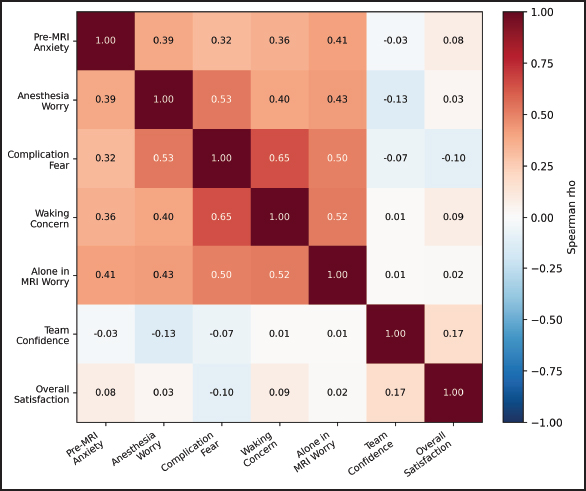
Figure 1. Spearman rank-correlation matrix of anxiety items, team confidence, and overall satisfaction (N = 153). Composite anxiety was not correlated with overall satisfaction (rs = 0.004; p = 0.965).
The most novel finding is the absence of any meaningful correlation between anxiety and satisfaction. This independence is consistent with Gu et al. [17] and Van Ark et al. [18] and contrasts with the inverse or domain-specific associations reported by Bello et al. [16] and Admass et al. [27]. Clinically, the implication is twofold: reducing anxiety remains an important standalone goal because of its effect on parental experience and procedural cooperation, yet satisfaction can be sustained even among highly anxious parents when the team communicates effectively and earns trust [28]. High-quality communication may thus buffer the experiential burden of elevated maternal anxiety, since satisfaction did not differ between mothers and fathers despite higher maternal anxiety.
This study has several strengths and limitations. Strengths include the concurrent assessment of three constructs, appropriate non-parametric statistics, and region-specific data from an under-studied population. Limitations should temper interpretation. The cross-sectional, single-center design with pragmatic, consecutive (convenience) sampling limits causal inference and generalizability. No a priori sample-size or power calculation was performed, so the study may have been underpowered for some subgroup comparisons, and the overrepresentation of fathers (69.3%) further constrains power for maternal subgroups. The questionnaire was investigator-developed and underwent only pilot testing for face validity in five parents - rather than formal validation against an established instrument such as the State-Trait Anxiety Inventory - so its psychometric properties are limited; internal consistency was modest for some domains (awareness of anesthesia and sedation, α = 0.502; satisfaction and communication, α = 0.606). Overall satisfaction was measured with a single item, which cannot capture its multidimensional structure. Finally, the reported odds ratios are unadjusted associations derived from 2 × 2 Fisher’s exact analyses; because no multivariable logistic regression was performed - precluded in part by the small number of dissatisfied respondents - these variables cannot be interpreted as independent predictors.
Future work should include multicenter, prospective studies using validated instruments such as the Pediatric Anesthesia Parent Satisfaction survey, with longitudinal follow-up and multivariable modeling. Randomized trials of structured pre-procedural education - multimedia materials, simulated walkthroughs, or teach-back during consent - should test whether such interventions reduce anxiety, close knowledge gaps, and preserve satisfaction, and qualitative research could clarify culturally specific drivers in Saudi and broader Middle Eastern populations.
Conclusion
Parents of children undergoing MRI with sedation or anesthesia at this tertiary center experienced moderate-to-high anxiety - greatest among mothers and parents of younger children - alongside substantial gaps in knowledge of the planned anesthetic and the MRI modality. Satisfaction was high and was driven chiefly by communication quality rather than demographic or clinical factors, and anxiety and satisfaction behaved as independent constructs. Structured pre-procedural communication, validated comprehension checks, and targeted education - particularly for mothers and parents of younger children - are needed to reduce anxiety and close knowledge gaps while sustaining the high satisfaction already observed.
List of Abbreviations
MRI magnetic resonance imaging
OR odds ratio
PAPS Pediatric Anesthesia Parent Satisfaction
rs Spearman rank-correlation coefficient
STAI State-Trait Anxiety Inventory
Conflict of interest
The authors declare that there is no conflict of interest regarding the publication of this article.
Funding
None.
Consent to participate
Written informed consent was obtained from all participants prior to data collection.
Consent for publication
Not applicable (no individual identifying data are presented).
Ethical approval
The study was conducted in accordance with the Declaration of Helsinki and was approved by the Scientific and Research Committee, King Fahad Hospital, Al-Baha, Saudi Arabia, via reference/letter number [IRB-KFH14052025/7] dated [14/05/2025].
Author details
Ayidh Saad Alharthi1, Rahaf Ali Alghamdi2, Dalia Ghurmullah I Alghamdi2, Salwa Ibrahim Alghamdi2, Sarah Dhaifallah S Alqarni2, Daniyah Ali Alghamdi2, Shouq Atyah Alzahrani2, Lamis Khalid Alzahrani2, Khalid Abdulkarim Alzahrani3
- Consultant, Department of Pediatric Neurology, King Fahad Hospital, Al-Baha, Saudi Arabia
- Faculty of Medicine, Al-Baha University, Al-Baha, Saudi Arabia
- Resident of Pediatric Medicine, King Fahad Hospital, Al-Baha, Saudi Arabia
Supplementary content (If any) is available online.
References
- Güzel A, Atlı A, Doğan E, Çelik F, Tüfek A, Dusak A, et al. Magnetic resonance imaging in children under anesthesia: the relationship between the degree of information provided to parents and parents’ anxiety scores. BioMed Res Int. 2014;2014:425107. https://doi.org/10.1155/2014/425107
- Artunduaga M, Liu CA, Morin CE, Serai SD, Udayasankar U, Greer MLC, et al. Safety challenges related to the use of sedation and general anesthesia in pediatric patients undergoing magnetic resonance imaging examinations. Pediatr Radiol. 2021;51(5):724–35. https://doi.org/10.1007/s00247-021-05044-5
- Mallory MD, Travers C, Cravero JP, Kamat PP, Tsze D, Hertzog JH. Pediatric sedation/anesthesia for MRI: results from the Pediatric Sedation Research Consortium. J Magn Reson Imag. 2023;57(4):1106–13. https://doi.org/10.1002/jmri.28392
- Ayenew NT, Endalew NS, Agegnehu AF, Bizuneh YB. Prevalence and factors associated with preoperative parental anxiety among parents of children undergoing anesthesia and surgery: a cross-sectional study. Int J Surg Open. 2020;24:18–26. https://doi.org/10.1016/j.ijso.2020.03.004
- Kain ZN, Mayes LC, Caldwell-Andrews AA, Karas DE, Mcclain BC. Preoperative anxiety, postoperative pain, and behavioral recovery in young children undergoing surgery. Pediatrics. 2006;118(2):651–8. https://doi.org/10.1542/peds.2005-2920
- Cui X, Zhu B, Zhao J, Huang Y, Luo A, Wei J. Parental state anxiety correlates with preoperative anxiety in Chinese preschool children. J Paediatr Child Health. 2016;52(6):649–55. https://doi.org/10.1111/jpc.13176
- Souri Z, Kanafi Vahed L, Shahrokhi Rad R, Biazar G, Rostami M. Parents and radiologists attitudes towards sedation in pediatric magnetic resonance imaging: a report from Northern Iran. J Compr Pediatr. 2025;16(4):e164036. https://doi.org/10.5812/jcp-164036
- Pomicino L, Maccacari E, Buchini S. Levels of anxiety in parents in the 24 hr before and after their child’s surgery: a descriptive study. J Clin Nurs. 2018;27(1-2):278–87. https://doi.org/10.1111/jocn.13895
- Afzal R, Rashid S, Khan FA. The role of preoperative educational intervention in reducing parental anxiety. Cureus. 2022;14(7):e26548. https://doi.org/10.7759/cureus.26548
- Fatih Y, Arife S, Aysegul B, Betul B. The effect of child preference for parental selection on pediatric anxiety during induction in children undergoing elective day case surgery. J Perianesth Nurs. 2024;39(3):397–402. https://doi.org/10.1016/j.jopan.2023.08.021
- Litman R, Berger A, Chhibber A. An evaluation of preoperative anxiety in a population of parents of infants and children undergoing ambulatory surgery. Paediatr Anaesth. 1996;6(6):443–7. https://doi.org/10.1046/j.1460-9592.1996.d01-17.x
- Chua GCC, Cyna AM. Satisfaction measures in pediatric anesthesia and perioperative care. Paediatr Anaesth. 2021;31(7):746–54. https://doi.org/10.1111/pan.14197
- Chorney JM, Kain ZN. Family-centered pediatric perioperative care. Anesthesiology. 2010;112(3):751–5. https://doi.org/10.1097/ALN.0b013e3181cb5ade
- Lew VK, Lalwani K, Palermo TM. Factors affecting parental satisfaction following pediatric procedural sedation. J Clin Anesth. 2010;22(1):29–34. https://doi.org/10.1016/j.jclinane.2009.02.012
- Milliken‐Glabe SJ, Zuk J, Ziniel SI, Bjur KA, Alvarez M, Szolnoki JM, et al. First steps in validating the pediatric anesthesia parent satisfaction (PAPS) survey. Paediatr Anaesth. 2017;27(2):153–61. https://doi.org/10.1111/pan.13053
- Bello C, Nuebling M, Koster KL, Heidegger T. Patient-reported perioperative anaesthesia-related anxiety is associated with impaired patient satisfaction: a secondary analysis from a prospective observational study in Switzerland. Sci Rep. 2023;13(1):16301. https://doi.org/10.1038/s41598-023-43447-6
- Gu X, Zhang Y, Wei W, Zhu J. Effects of preoperative anxiety on postoperative outcomes and sleep quality in patients undergoing laparoscopic gynecological surgery. J Clin Med. 2023;12(5):1835. https://doi.org/10.3390/jcm12051835
- Van Ark TJ, Klimek M, De Smalen P, Vincent AJ, Stolker RJ. Anxiety, memories and coping in patients undergoing intracranial tumor surgery. Clin Neurol Neurosurg. 2018;170:132–9. https://doi.org/10.1016/j.clineuro.2018.05.013
- Mathew PJ, Regmi S, Ashok V, Menon P. Current practice of pre-anaesthesia preparation and perioperative parental satisfaction during paediatric ambulatory procedures in a developing country - An observational study. Anaesth Crit Care Pain Med. 2020;39(5):667–72. https://doi.org/10.1016/j.accpm.2019.10.019
- Tait AR, Voepel-Lewis T, Gauger V. Parental recall of anesthesia information: informing the practice of informed consent. Anesth Analg. 2011;112(4):918–23. https://doi.org/10.1213/ANE.0b013e31820a9193
- Sjauw DJT, Dulfer K, Van Hoorn CE, Buijs V, De Bruijn L, Reijtenbagh BWM, et al. The eXpectations of Parents regarding Anesthesiology Study (XPAS) from a parental perspective: a two-phase observational cross-sectional cohort study. Paediatr Anaesth. 2023;33(12):1034–74. https://doi.org/10.1111/pan.14748
- Wisselo TL, Stuart C, Muris P. Providing parents with information before anaesthesia: what do they really want to know?. Paediatr Anaesth. 2004;14(4):299–307. https://doi.org/10.1046/j.1460-9592.2003.01222.x
- Bogusaite L, Razlevice I, Lukosiene L, Macas A. Evaluation of preoperative information needs in pediatric anesthesiology. Med Sci Monit. 2018;24:8773–80. https://doi.org/10.12659/MSM.910734
- Battah H, AlZoraigi U, Shubbak F. Effectiveness of preoperative tour to a simulated anaesthesia induction at operating theatre in reducing preoperative anxiety in children and their parents: a pragmatic, single-blinded, randomised controlled trial. BMJ Simul Technol Enhanc Learn. 2021;7(5):397–403. https://doi.org/10.1136/bmjstel-2020-000707
- Aljohani DM. Views, experiences, and challenges of anesthetists and anesthesia technologists on parental presence during induction of anesthesia in children: a mixed-method study. Glob J Qual Saf Healthc. 2022;5(3):65–74. https://doi.org/10.36401/JQSH-22-2
- Tait AR, Voepel-Lewis T, Malviya S. Do they understand? (part I): parental consent for children participating in clinical anesthesia and surgery research. Anesthesiology. 2003;98(3):603–8. https://doi.org/10.1097/00000542-200303000-00005
- Admass BA, Hailemariam AS, Agegnehu AF, Getahun AB. Parental satisfaction and associated factors toward their child’s anesthesia service at a comprehensive specialized referral hospital in Ethiopia, 2021: a cross-sectional study. Front Pediatr. 2021;10:849969. https://doi.org/10.3389/fped.2022.849969
- Keating NL, Green DC, Kao AC, Gazmararian JA, Wu VY, Cleary PD. How are patients’ specific ambulatory care experiences related to trust, satisfaction, and considering changing physicians?. J Gen Intern Med. 2002;17(1):29–39. https://doi.org/10.1046/j.1525-1497.2002.10209.x
Keywords: Parental anxiety, parental satisfaction, pediatric sedation, anesthesia, magnetic resonance imaging, family-centered care.


Publication History
Received: May 24, 2026
Revised: July 12, 2026
Accepted: July 21, 2026
Published: August 15, 2026
Authors
Ayidh Saad Alharthi
Consultant, Department of Pediatric Neurology, King Fahad Hospital, Al-Baha, Saudi Arabia.
Rahaf Ali Alghamdi
Faculty of Medicine, Al-Baha University, Al-Baha, Saudi Arabia.
Dalia Ghurmullah I Alghamdi
Faculty of Medicine, Al-Baha University, Al-Baha, Saudi Arabia.
Salwa Ibrahim Alghamdi
Faculty of Medicine, Al-Baha University, Al-Baha, Saudi Arabia.
Sarah Dhaifallah S Alqarni
Faculty of Medicine, Al-Baha University, Al-Baha, Saudi Arabia.
Daniyah Ali Alghamdi
Faculty of Medicine, Al-Baha University, Al-Baha, Saudi Arabia.
Shoug Atyah Alzahrani
Faculty of Medicine, Al-Baha University, Al-Baha, Saudi Arabia.
Lamis Khalid Alzahrani
Faculty of Medicine, Al-Baha University, Al-Baha, Saudi Arabia.
Khalid abdulkarim alzahrani
Resident of Pediatric Medicine, King Fahad Hospital, AlBaha, Saudi Arabia.